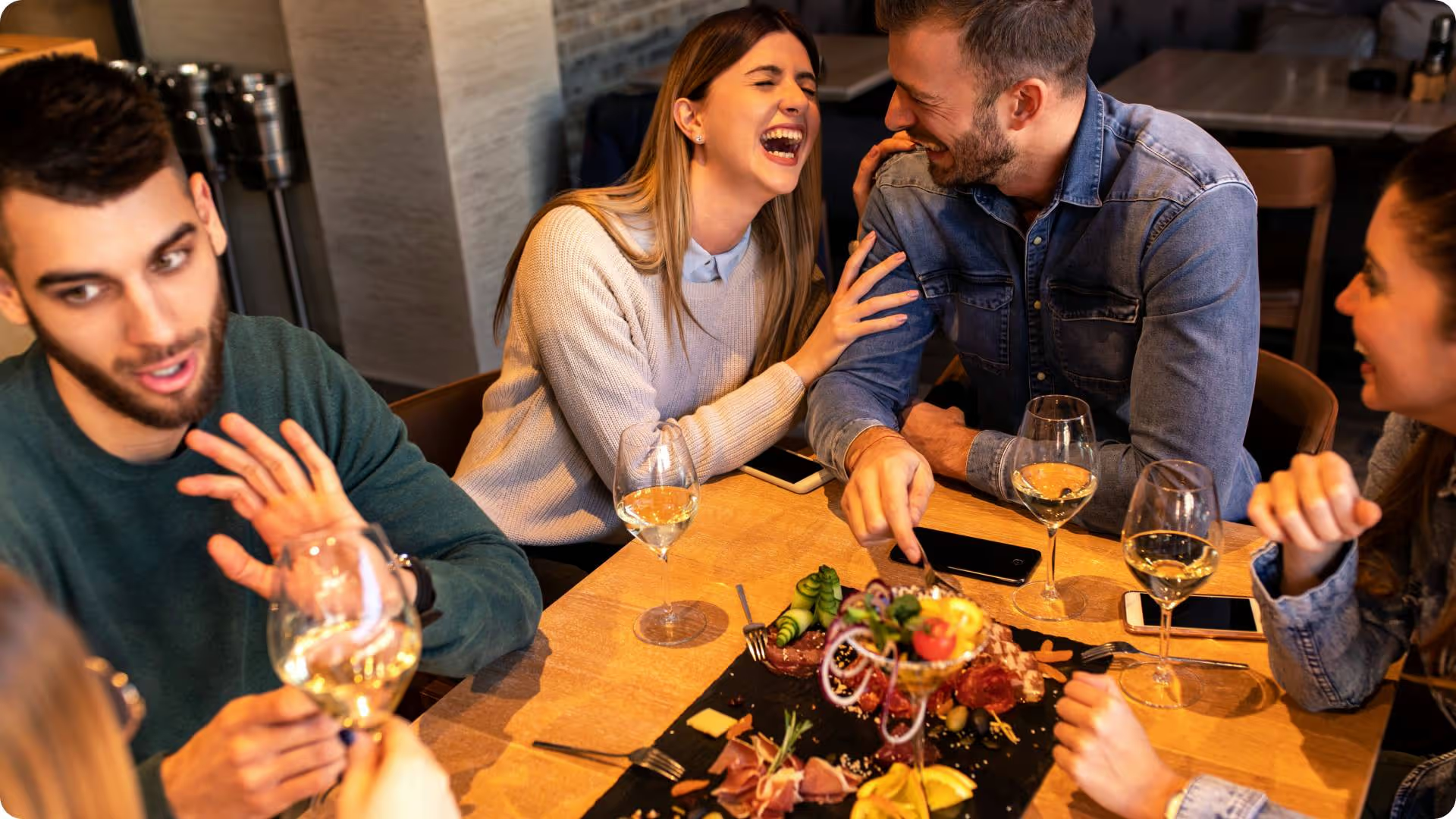
You know that feeling when a customer walks through your door for the hundredth time, greets your staff by name, and orders "the usual"? That's not just a warm fuzzy moment – it's the sound of your cash register singing. Building customer loyalty in a restaurant isn't about luck or having the fanciest menu in town. It's about creating experiences that stick in people's minds long after they've paid the check.
Here's the thing: acquiring a new customer costs five times more than keeping an existing one. Yet most restaurant owners spend their entire marketing budget chasing new faces while their regulars slowly drift away to the shiny new place down the street. Let's flip that script.
Why Customer Loyalty is Your Restaurant's Secret Weapon
Picture this: Sarah comes into your restaurant every Friday for lunch. She brings colleagues, celebrates birthdays there, and posts about your killer pasta on Instagram. Now multiply Sarah by fifty, a hundred, or more. That's the power of loyalty – it's not just repeat business; it's free marketing, consistent revenue, and a buffer against slow seasons.

The restaurant industry sees customer perception directly influenced by service quality, and loyalty follows perception like cheese follows wine. When customers feel valued, they don't just come back – they become your unpaid brand ambassadors.
Understanding the 4 C's of Customer Loyalty (And Why the 4 P's Matter Too)
What Are the 4 C's of Customer Loyalty?
Think of the 4 C's as your loyalty roadmap:
- Customer Value – What unique experience are you delivering?
- Convenience – How easy is it to choose you over competitors?
- Communication – Are you talking with customers, not at them?
- Customer Experience – Does every touchpoint sparkle?
These aren't just buzzwords I'm throwing around. They're the foundation of every successful loyalty program I've seen work in real restaurants, from tiny family diners to multi-location chains.
The 4 P's vs. the 4 C's: What's the Difference?
While the traditional 4 P's (Product, Price, Place, Promotion) focus on what you're selling, the 4 C's flip the perspective to what customers are buying. It's like the difference between saying "We make great burgers" and "You'll love how our burgers make you feel." Small shift, massive impact.
The Three Pillars of Customer Success (And How to Build Them)
What Are the Three Pillars of Customer Success?
Breaking news: customers don't care about your restaurant's success story unless it includes them as the hero. The three pillars that actually matter are:
- Value Realization – Customers get what they came for (and then some)
- Operational Excellence – Your service runs like a Swiss watch
- Strategic Partnership – You're not just feeding them; you're part of their lifestyle
I once worked with a taco joint that transformed their business by focusing on these pillars. They stopped thinking "How do we sell more tacos?" and started asking "How do we become Tuesday night tradition for local families?" Game changer.
The Two Biggest Factors That Determine Restaurant Loyalty
Factor #1: Consistency is King
You can have mediocre food, but if it's consistently mediocre and served with a smile, you'll build a following. Weird but true. Customers value predictability more than perfection. They want to know that their favorite dish will taste the same whether it's Monday or Saturday, whether Tom or Jennifer is cooking.
Factor #2: Emotional Connection Beats Everything
Here's where it gets interesting. Restaurants creating long-term brand connections understand that loyalty isn't logical – it's emotional. When your server remembers that Mr. Johnson likes his coffee black with two sugars, that's not just good service; that's relationship building.
The Customer Loyalty Ladder: How to Move People Up
Think of customer loyalty like dating. You don't propose on the first date (please don't), and you shouldn't expect loyalty after one meal. Here's the ladder:
How Do You Identify Loyal Customers?
Loyal customers leave breadcrumbs everywhere. They're the ones who:
- Know your menu better than new servers
- Bring friends and family
- Leave reviews without being asked
- Tag you on social media
- Come in during off-peak hours
Once you spot them, treat them like the VIPs they are. Not with expensive perks, but with recognition and genuine appreciation.
The 4 Phases of Loyalty (And Where Most Restaurants Drop the Ball)
Phase 1: Cognitive Loyalty (The Head)
They think you're a logical choice. Good location, decent prices, acceptable food.
Phase 2: Affective Loyalty (The Heart)
Now they like you. The food makes them happy, the atmosphere feels right.
Phase 3: Conative Loyalty (The Intent)
They intend to come back. You're on their shortlist.
Phase 4: Action Loyalty (The Habit)
Boom. You're part of their routine. This is where the magic happens.
Most restaurants nail Phase 1 and maybe Phase 2, then wonder why customers don't stick around. You need all four phases, and you need to guide customers through each one deliberately.

Types of Customer Loyalty (And Which One You Really Want)
The Two Types That Matter Most
Transactional Loyalty: "I come here because you give me points."Emotional Loyalty: "I come here because it feels like home."
Guess which one survives when a competitor offers better points? Exactly. Build emotional loyalty first, then layer rewards on top if you want. But never mistake a full punch card for a full heart.
The 30-30-30 Rule for Restaurants
Want a simple framework? Here's what works:
- 30% of effort on attracting new customers
- 30% on serving current customers excellently
- 30% on turning customers into regulars
- 10% buffer for putting out fires (because restaurant life)
This isn't about complex math. It's about balance. Too many restaurants go 90% on attracting new customers and wonder why they're always starting from scratch.
What Does 87 Mean in a Restaurant? (The Service Quality Code)
In restaurant lingo, "87" means you're out of something. But there's another 87 that matters more: 87% of customers will switch to a competitor after just one bad experience. One. That's your margin for error.
This is why consistency beats occasional excellence. You can't afford to be amazing most of the time and terrible sometimes. Better to be reliably good every single time.
The 2-2-2 Rule for Food Service
Here's a simple formula that works:
- 2 minutes to greet new arrivals
- 2 minutes to take drink orders
- 2 follow-ups during the meal
It's not rocket science, but you'd be amazed how many places fail this basic test. Set timers if you have to. Train it until it's automatic.
The 5 Foot Rule and 10 Foot Rule in Restaurants
The 5 Foot Rule
Anyone within 5 feet gets acknowledged. Eye contact, nod, smile – something that says "I see you, and you matter."
The 10 Foot Rule
Anyone within 10 feet who looks confused or in need gets helped. Period. Even if they're not your table. Even if you're busy.
These rules transform service culture overnight. I've seen it happen.
The 68 Rule: Why Average Customers Matter Most
In any restaurant, 68% of your customers are neither thrilled nor disappointed. They're in the middle, waiting to be pushed toward loyalty or indifference. These are your opportunity customers – much easier to convert than attracting new ones, much more valuable than you think.
The 7 Steps of Service Excellence
- Warm Welcome – First impressions set the tone
- Efficient Seating – No awkward waiting
- Menu Presentation – Clean, organized, enticing
- Order Taking – Knowledgeable and patient
- Food Delivery – Right temp, right time, right table
- Check-Back – "How's everything?" actually means it
- Fond Farewell – Leave them wanting more
Skip any step, and the chain breaks.
The 7 Restaurant Service Ratios That Predict Success
The Three C's That Make or Break a Restaurant
- Consistency – Same quality, every time
- Cleanliness – Non-negotiable, always
- Connection – With customers, community, and crew
Nail these three, and you're 80% there. Miss any one, and the other two won't save you.
What Makes a Restaurant 3 Star vs. 5 Star?
Here's the truth: the difference between 3 stars and 5 stars isn't the food. It's the details. A 3-star restaurant serves good food. A 5-star restaurant serves an experience where every element has been considered, from the temperature of the plates to the timing of the check.
The Three Elements of Great Customer Service
1. Anticipation
Great servers don't wait for requests; they anticipate needs. Low on water? Filled before asking. Celebrating something? Dessert appears with a candle.
2. Personalization
Remember preferences, names, occasions. Use them. It costs nothing and means everything.
3. Recovery
When things go wrong (and they will), how you recover determines whether you lose a customer or create a loyal fan. Own it, fix it, exceed expectations.
The 4 P's of Marketing for Restaurant Loyalty
Beyond the traditional product-price-place-promotion, here are the 4 P's that actually build restaurant loyalty:
- People – Your team is your brand
- Process – Smooth operations create great experiences
- Physical Evidence – Everything customers see, smell, touch
- Personalization – Make each visit feel special
Four Ways to Attract (and Keep) Customers
1. Create Signature Experiences
Not just signature dishes – signature moments. The birthday song your staff sings. The complimentary appetizer for first-timers. The coffee art that makes Instagram.
2. Build Community, Not Just Customer Base
Host local events, support local causes, become the neighborhood living room. When you're part of the community fabric, leaving you feels like betrayal.
3. Surprise and Delight (Strategically)
Random acts of kindness work. Comp a dessert. Send a handwritten thank-you note. Remember an anniversary. Small gestures, massive impact.
4. Make Feedback a Two-Way Street
Don't just collect feedback; show how you use it. "You asked for more vegetarian options, so here's our new plant-based menu." That's how you show customers they matter.
How to Drive More Traffic Into Your Restaurant
Want more people? Stop thinking like a restaurant and start thinking like a destination. People need reasons beyond hunger to choose you:
- Monday: Industry night with special pricing
- Tuesday: Trivia that becomes legendary
- Wednesday: Wine flights and education
- Thursday: Local music showcase
- Friday: Date night special experiences
- Weekend: Family-friendly events
Each day offers a different reason to visit. Suddenly, you're not just a restaurant; you're part of people's weekly rhythm.
How Can You Increase Sales 100%?
Double your sales? It's not about doubling your customers. It's about maximizing what you have:
- Increase visit frequency by 25%
- Increase average check by 25%
- Increase party size by 25%
- Increase operational hours strategically by 25%
Compound these improvements, and you're looking at massive growth without massive investment.
The Restaurant Marketing Strategy That Actually Works
Forget spray-and-pray advertising. Here's what moves the needle:
- Own Your Online Presence – Google, Yelp, Instagram, your website. Be findable and bookable.
- Email Like You Mean It – Not spam, but valuable content. Recipes, stories, insider tips.
- Create Instagrammable Moments – Not fake ones. Real, shareable experiences.
- Partner Locally – Other businesses, schools, organizations. Their customers become yours.
- Reward Loyalty Visibly – When regulars get special treatment, everyone wants to be a regular.
How to Attract People's Attention in a Restaurant
Attention isn't about being loudest; it's about being most relevant:
- Smell: Fresh bread, coffee, grilled onions – smells that stop people
- Sound: The right playlist at the right volume
- Sight: Movement in windows, beautiful plating, engaged staff
- Story: What makes you different? Tell it everywhere
How Do Menus Attract Customers?
Your menu is your silent salesperson. Make it work harder:
- Descriptive but not pretentious language
- Strategic pricing (not just cheap)
- Visual hierarchy guiding eyes to profitable items
- Stories behind signature dishes
- Clear sections for dietary preferences
- Photos sparingly, but professionally
How to Sell More in Your Restaurant (Without Being Pushy)
Train your team in suggestion, not selling:
"Have you tried our famous [dish]?" beats "Would you like to add [expensive item]?"
"The chef's special tonight is incredible" beats "We need to move more specials"
"Save room for our [dessert] – it's what we're known for" beats "Any dessert tonight?"
It's recommendation, not pressure. Enthusiasm, not desperation.
Your Restaurant Loyalty Action Plan
Building customer loyalty isn't a project with an end date. It's a culture, a mindset, a daily practice. Start here:
Week 1-2: Audit your current customer experience. Sit in your own restaurant. Order online. Call for a reservation. Experience what customers experience.
Week 3-4: Identify your top 20% customers. Learn their names, preferences, stories. Make them feel like VIPs.
Week 5-6: Implement one new loyalty-building practice. Could be the 5-foot rule, could be birthday tracking, could be a simple punch card. Start small, be consistent.
Week 7-8: Measure and adjust. What's working? What's not? Ask customers directly.
Remember, every restaurant started with zero loyal customers. The ones that thrive are the ones that turned customers into community, transactions into relationships, and meals into memories.
You don't need a million-dollar budget or a celebrity chef. You need genuine care for your customers, consistency in your delivery, and the commitment to keep improving. That's how you build a restaurant that doesn't just survive – it becomes irreplaceable.
Ready to try Fresh KDS in your restaurant?




.png)


.webp)


