
Fraud Blocker

The Compounding Benefit of Repeat Customers

Repeat customers don't just spend more — they compound. Here's how multi-unit restaurant operators can turn retention into a scalable revenue engine.

ABOUT THIS RESTAURANT

Service Type

Locations:

Location

POS Used

See how Fresh KDS can impact your kitchen efficiency today.
Get started
Simplify your kitchen operations with Fresh KDS.
Get started — it's free

Most multi-unit restaurant operators are playing an expensive game of addition — constantly spending to attract new customers — while the most powerful growth engine in their business is already seated at a table, ordering their usual. The math on repeat customers isn't just favorable. It compounds. And for operators running 10, 20, or 50 locations, the difference between treating retention as a priority and treating it as an afterthought could represent millions of dollars in revenue left on the table.

This post breaks down the data behind repeat customer revenue, what's driving the industry's retention problem, and what operators can do — starting with their kitchens — to capture a compounding advantage that scales with every unit they add.

Regular Are Already Doing the Heavy Lifting

Before getting into strategy, it's worth anchoring on what the data actually shows about where restaurant revenue comes from.

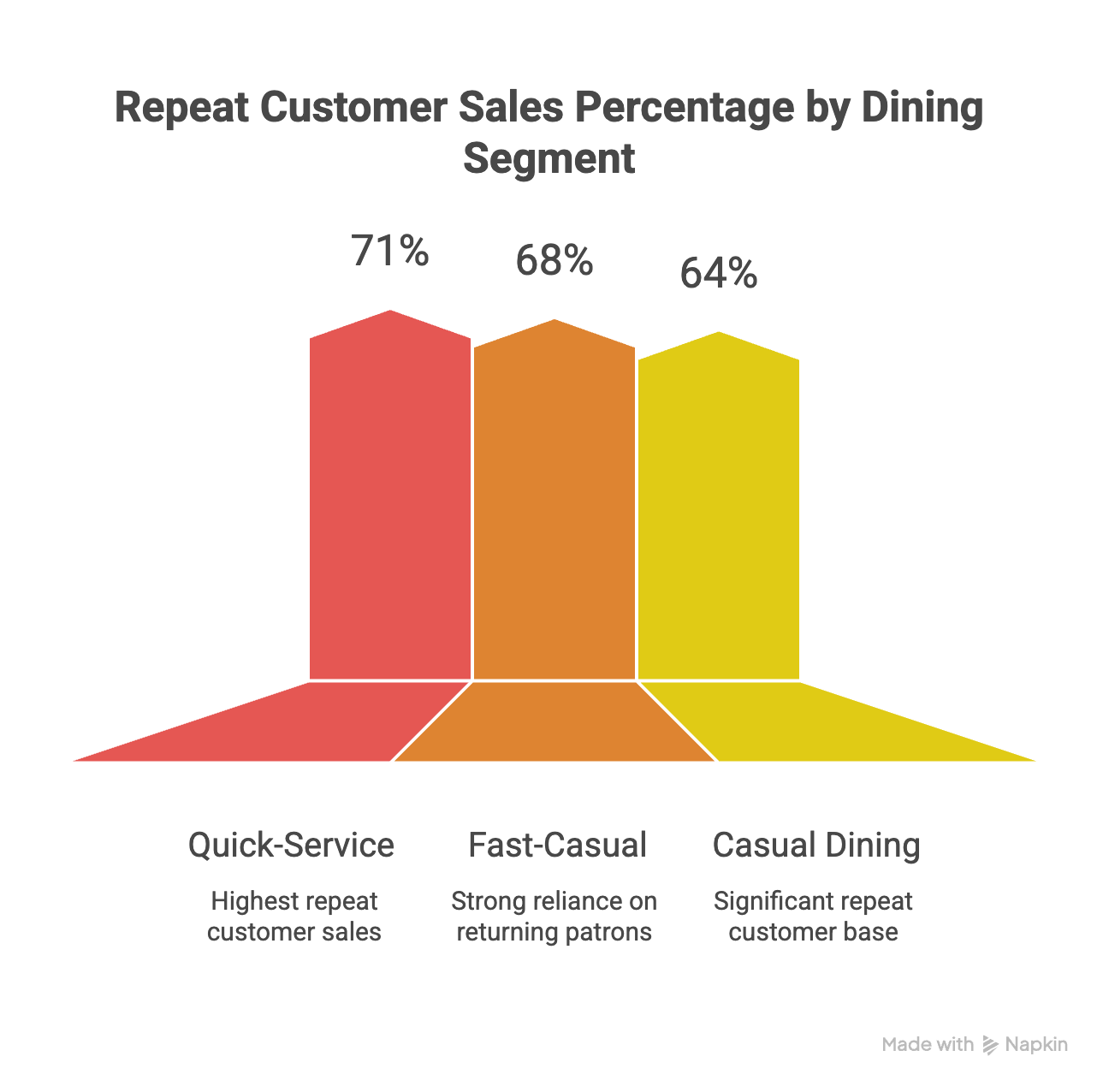
Quick-service restaurants generate approximately 71% of their sales from repeat customers. Fast-casual sits at 68%. Casual dining, 64%. Across formats, the pattern is consistent: the majority of a restaurant’s revenue comes from regulars, not new customers.
For a single location, those numbers are significant. Multiply them across a multi-unit portfolio and the stakes become a different conversation entirely. If 70% of revenue at each of your 20 locations depends on guests choosing to come back, then retention isn't a customer experience metric — it's the financial foundation of the entire business.

The strategic implication is straightforward: if repeat customers are already your biggest revenue driver, they deserve a proportional share of your strategic attention. Most operators don't give them that.
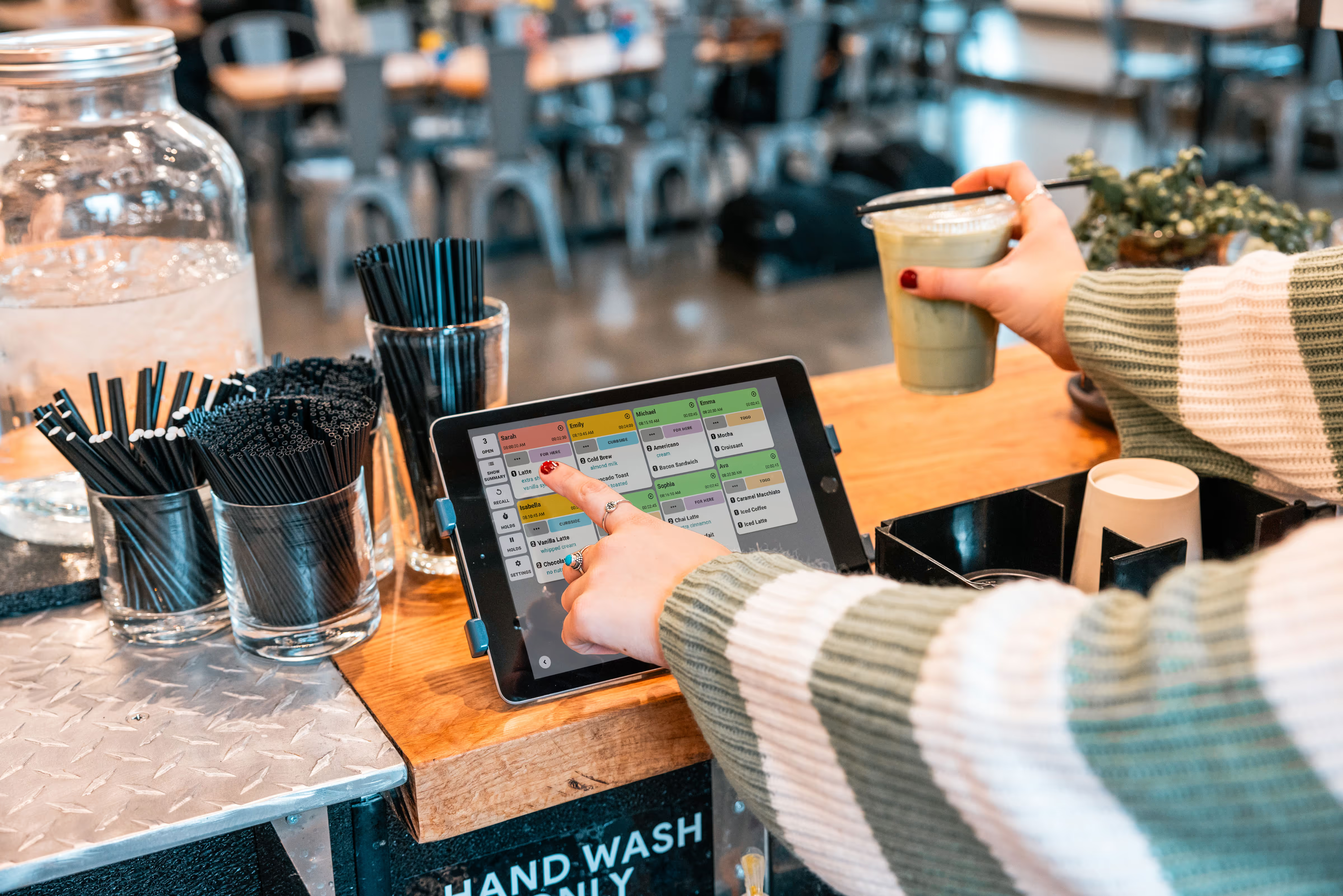
Serve every order on time

Why Loyal Customers Are Worth Far More Than a Single Visit

The revenue contribution of repeat customers isn't linear. It compounds — and the mechanics of that compounding are worth understanding precisely.

Repeat customers spend 67% more than new customers. At the same time, keeping a customer costs 5–7 times less than acquiring a new one. Layer on the finding that increasing retention by just 5% can increase profits by over 25%  — and the compounding logic becomes hard to ignore.
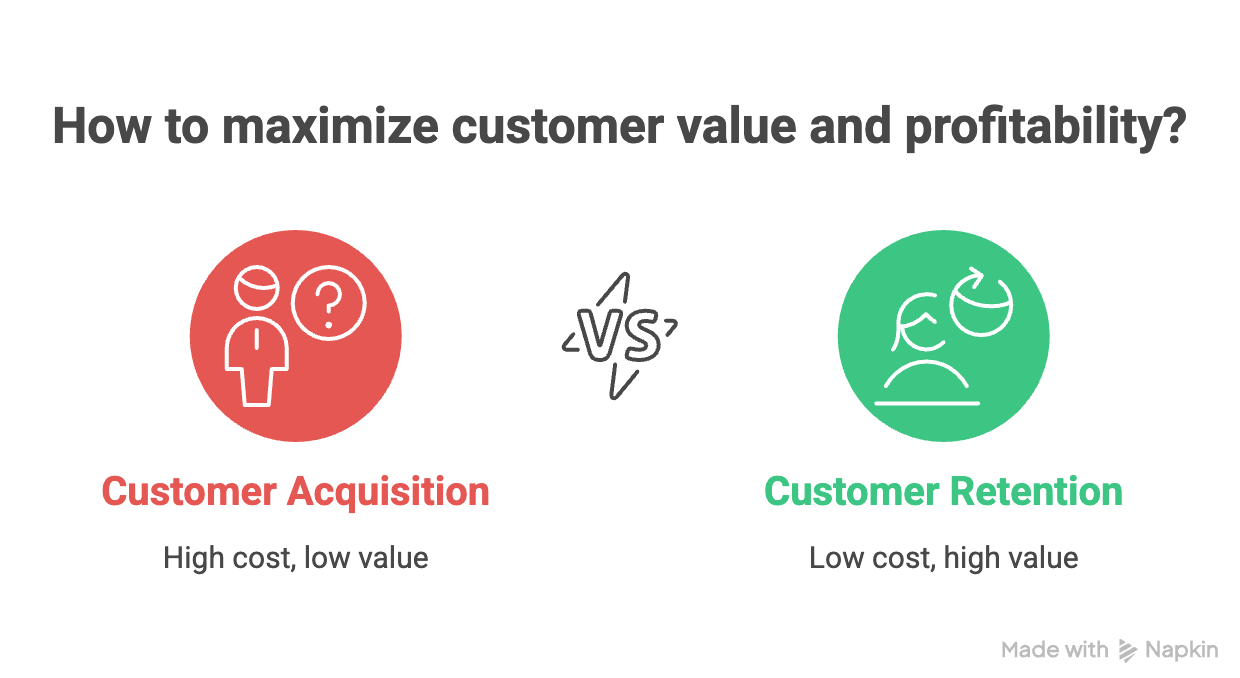
Consider what a 5% retention improvement looks like across a 20-unit portfolio. If each location serves 500 unique guests per month and currently retains 55% of them, a 5% improvement means roughly 25 additional returning customers per location per month. Those customers spend more per visit, require no acquisition cost, and visit more frequently. Across 20 locations, over 12 months, the revenue impact is significant — and that's before accounting for the word-of-mouth referrals loyal customers generate.

This is the compounding effect: more visits, higher spend per visit, lower acquisition cost, and organic referrals all working together. The return isn't additive. It multiplies.

The Industry’s Uncomfortable Truth

Here's the problem: most restaurants are losing the retention game.

The industry average retention rate hovers around 55%, well below the 75% global benchmark across industries. Even more striking, 70% of first-time diners never return. A "good" repeat customer rate for restaurants is generally considered to be 30–40% — meaning many operators are falling short of even that bar.

Recent consumer behavior makes this worse. Consumers today are more cautious, more selective with discretionary spending, and quicker to write off an experience that doesn't meet expectations. In this environment, the margin for error on any given guest visit is narrower than it has ever been.

So if 70 out of every 100 first-time guests never come back, what is actually driving them away? The answer, more often than operators want to acknowledge, comes down to operational execution.

The Retention Killers Start in the Kitchen

Retention isn't primarily a marketing problem. It's an operational problem.

Loyalty programs, rewards points, and email campaigns can nudge a guest back for a second visit — but they can't manufacture a good experience once the guest arrives. And across a multi-unit brand, inconsistency is the single most corrosive force working against retention. A guest who has a bad experience at one location — slow service, a wrong order, food that didn't match what they've come to expect — may not return to *any* location in the brand. The damage isn't local. It's systemic.

Speed of service and order accuracy are foundational to guest satisfaction. When kitchens miss on either, repeat visits evaporate. This is where back-of-house operations become a retention tool, not just an efficiency tool.

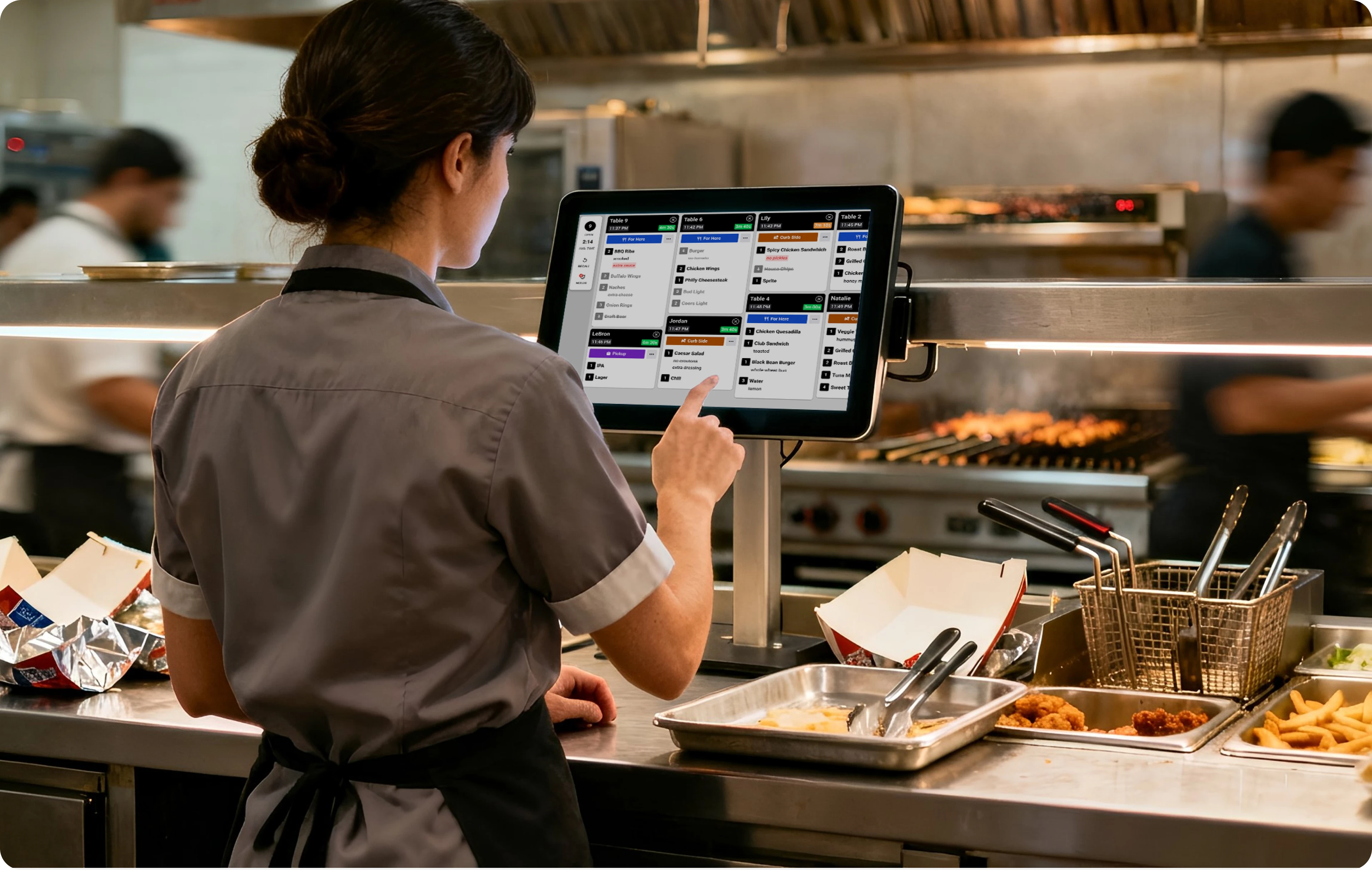
A kitchen display system like Fresh KDS helps multi-unit operators address this directly. By giving kitchen teams clear, real-time visibility into every order — with routing logic that reduces errors and keeps ticket times consistent — Fresh KDS helps ensure that the experience a guest has at Location 3 matches what they expect from Location 11. That consistency is what builds the trust that brings guests back.

Operators who invest in kitchen technology to reduce errors and accelerate service are making a retention investment as much as an efficiency investment. The two are inseparable. Every accurate order that arrives on time is a small vote in favor of a return visit. Over thousands of covers, those votes accumulate into a loyal customer base.
Fresh KDS

Loyalty Programs: An Amplifier, Not a Foundation

The loyalty program conversation is unavoidable. 57% of restaurants have now implemented some form of loyalty or rewards program — and the data on their impact is compelling. Loyalty members visit 20% more frequently and spend 20% more per visit. Restaurants with loyalty programs see customers return 41% more often and spend 67% more on average. Mobile-responsive loyalty programs have been linked to a 60% increase in customer spending.

But here's the nuance multi-unit operators need to hold onto: loyalty programs amplify what's already working. They are an amplifier, not a foundation.

If the in-store experience is inconsistent — if wait times vary wildly by location, if order accuracy is a coin flip — a loyalty program won't fix the underlying retention problem. In fact, it may even accelerate churn by giving guests more frequent exposure to a disappointing experience.

The operators who will get the most out of loyalty programs heading into 2026 are those who treat them as a measurable business channel built on top of a reliable guest experience. Sequence matters: fix the experience first, then amplify it with loyalty.

The Free Dividend: Word-of-Mouth at Scale

There's one more compounding benefit that doesn't show up in most retention analyses: loyal customers recruit.

Nielsen data shows that 92% of consumers trust recommendations from friends and family over any form of advertising. For multi-unit operators, a loyal customer base across multiple markets creates organic, location-level word-of-mouth that no paid campaign can replicate or outspend. Satisfied regulars are effectively an unpaid sales force.

This is the free dividend of a strong retention strategy. Every time a regular brings a friend, recommends a location, or posts about a great experience, they're doing marketing that compounds on top of the operational investment already made. The more consistently a brand delivers a great experience, the more regulars do the recruiting — at zero acquisition cost.

Start With the Experience, Then Build the Loyalty

The math on repeat customers is clear. More visits, higher spend per visit, lower acquisition cost, organic word-of-mouth referrals, and more predictable revenue — together, these create the most powerful growth engine available to a multi-unit operator. And unlike paid acquisition, it gets stronger over time.

But the compounding effect only works if the guest experience is worth coming back to. Loyalty programs, marketing, and technology all play important roles — but they amplify a great experience; they don't create one. That experience is built visit by visit, order by order, in the kitchen.

The operators who win the retention game in 2026 won't just be the ones with the best rewards programs. They'll be the ones who got the fundamentals right — consistent, accurate, fast service across every location — and then built a loyalty strategy on top of that foundation.

Ready to try Fresh KDS in your restaurant?

March 13, 2026

The Compounding Benefit of Repeat Customers

Most multi-unit restaurant operators are playing an expensive game of addition — constantly spending to attract new customers — while the most powerful growth engine in their business is already seated at a table, ordering their usual. The math on repeat customers isn't just favorable. It compounds. And for operators running 10, 20, or 50 locations, the difference between treating retention as a priority and treating it as an afterthought could represent millions of dollars in revenue left on the table.

This post breaks down the data behind repeat customer revenue, what's driving the industry's retention problem, and what operators can do — starting with their kitchens — to capture a compounding advantage that scales with every unit they add.

Regular Are Already Doing the Heavy Lifting

Before getting into strategy, it's worth anchoring on what the data actually shows about where restaurant revenue comes from.

Quick-service restaurants generate approximately 71% of their sales from repeat customers. Fast-casual sits at 68%. Casual dining, 64%. Across formats, the pattern is consistent: the majority of a restaurant’s revenue comes from regulars, not new customers.

For a single location, those numbers are significant. Multiply them across a multi-unit portfolio and the stakes become a different conversation entirely. If 70% of revenue at each of your 20 locations depends on guests choosing to come back, then retention isn't a customer experience metric — it's the financial foundation of the entire business.

The strategic implication is straightforward: if repeat customers are already your biggest revenue driver, they deserve a proportional share of your strategic attention. Most operators don't give them that.

Serve every order on time

Why Loyal Customers Are Worth Far More Than a Single Visit

The revenue contribution of repeat customers isn't linear. It compounds — and the mechanics of that compounding are worth understanding precisely.

Repeat customers spend 67% more than new customers. At the same time, keeping a customer costs 5–7 times less than acquiring a new one. Layer on the finding that increasing retention by just 5% can increase profits by over 25%  — and the compounding logic becomes hard to ignore.

Consider what a 5% retention improvement looks like across a 20-unit portfolio. If each location serves 500 unique guests per month and currently retains 55% of them, a 5% improvement means roughly 25 additional returning customers per location per month. Those customers spend more per visit, require no acquisition cost, and visit more frequently. Across 20 locations, over 12 months, the revenue impact is significant — and that's before accounting for the word-of-mouth referrals loyal customers generate.

This is the compounding effect: more visits, higher spend per visit, lower acquisition cost, and organic referrals all working together. The return isn't additive. It multiplies.

The Industry’s Uncomfortable Truth

Here's the problem: most restaurants are losing the retention game.

The industry average retention rate hovers around 55%, well below the 75% global benchmark across industries. Even more striking, 70% of first-time diners never return. A "good" repeat customer rate for restaurants is generally considered to be 30–40% — meaning many operators are falling short of even that bar.

Recent consumer behavior makes this worse. Consumers today are more cautious, more selective with discretionary spending, and quicker to write off an experience that doesn't meet expectations. In this environment, the margin for error on any given guest visit is narrower than it has ever been.

So if 70 out of every 100 first-time guests never come back, what is actually driving them away? The answer, more often than operators want to acknowledge, comes down to operational execution.

The Retention Killers Start in the Kitchen

Retention isn't primarily a marketing problem. It's an operational problem.

Loyalty programs, rewards points, and email campaigns can nudge a guest back for a second visit — but they can't manufacture a good experience once the guest arrives. And across a multi-unit brand, inconsistency is the single most corrosive force working against retention. A guest who has a bad experience at one location — slow service, a wrong order, food that didn't match what they've come to expect — may not return to *any* location in the brand. The damage isn't local. It's systemic.

Speed of service and order accuracy are foundational to guest satisfaction. When kitchens miss on either, repeat visits evaporate. This is where back-of-house operations become a retention tool, not just an efficiency tool.

A kitchen display system like Fresh KDS helps multi-unit operators address this directly. By giving kitchen teams clear, real-time visibility into every order — with routing logic that reduces errors and keeps ticket times consistent — Fresh KDS helps ensure that the experience a guest has at Location 3 matches what they expect from Location 11. That consistency is what builds the trust that brings guests back.

Operators who invest in kitchen technology to reduce errors and accelerate service are making a retention investment as much as an efficiency investment. The two are inseparable. Every accurate order that arrives on time is a small vote in favor of a return visit. Over thousands of covers, those votes accumulate into a loyal customer base.

Fresh KDS

Loyalty Programs: An Amplifier, Not a Foundation

The loyalty program conversation is unavoidable. 57% of restaurants have now implemented some form of loyalty or rewards program — and the data on their impact is compelling. Loyalty members visit 20% more frequently and spend 20% more per visit. Restaurants with loyalty programs see customers return 41% more often and spend 67% more on average. Mobile-responsive loyalty programs have been linked to a 60% increase in customer spending.

But here's the nuance multi-unit operators need to hold onto: loyalty programs amplify what's already working. They are an amplifier, not a foundation.

If the in-store experience is inconsistent — if wait times vary wildly by location, if order accuracy is a coin flip — a loyalty program won't fix the underlying retention problem. In fact, it may even accelerate churn by giving guests more frequent exposure to a disappointing experience.

The operators who will get the most out of loyalty programs heading into 2026 are those who treat them as a measurable business channel built on top of a reliable guest experience. Sequence matters: fix the experience first, then amplify it with loyalty.

The Free Dividend: Word-of-Mouth at Scale

There's one more compounding benefit that doesn't show up in most retention analyses: loyal customers recruit.

Nielsen data shows that 92% of consumers trust recommendations from friends and family over any form of advertising. For multi-unit operators, a loyal customer base across multiple markets creates organic, location-level word-of-mouth that no paid campaign can replicate or outspend. Satisfied regulars are effectively an unpaid sales force.

This is the free dividend of a strong retention strategy. Every time a regular brings a friend, recommends a location, or posts about a great experience, they're doing marketing that compounds on top of the operational investment already made. The more consistently a brand delivers a great experience, the more regulars do the recruiting — at zero acquisition cost.

Start With the Experience, Then Build the Loyalty

The math on repeat customers is clear. More visits, higher spend per visit, lower acquisition cost, organic word-of-mouth referrals, and more predictable revenue — together, these create the most powerful growth engine available to a multi-unit operator. And unlike paid acquisition, it gets stronger over time.

But the compounding effect only works if the guest experience is worth coming back to. Loyalty programs, marketing, and technology all play important roles — but they amplify a great experience; they don't create one. That experience is built visit by visit, order by order, in the kitchen.

The operators who win the retention game in 2026 won't just be the ones with the best rewards programs. They'll be the ones who got the fundamentals right — consistent, accurate, fast service across every location — and then built a loyalty strategy on top of that foundation.

Ready to try Fresh KDS in your restaurant?

Switch to Fresh KDS with confidence

Follow this step-by-step guide for a quick and stress-free switch from Square KDS to Fresh KDS.

Why Speed of Service Matters

See why speed and consistency are key to restaurant success, improving guest satisfaction, revenue, and efficiency.

Related blogs

No items found.

Get started for free.

Begin your Fresh KDS 7-day trial today by setting up your account. The process is completely free, and only takes a few minutes. No credit card is needed, and you can cancel anytime.

Get started - it's free
Boosting kitchen EFFICIENCY at