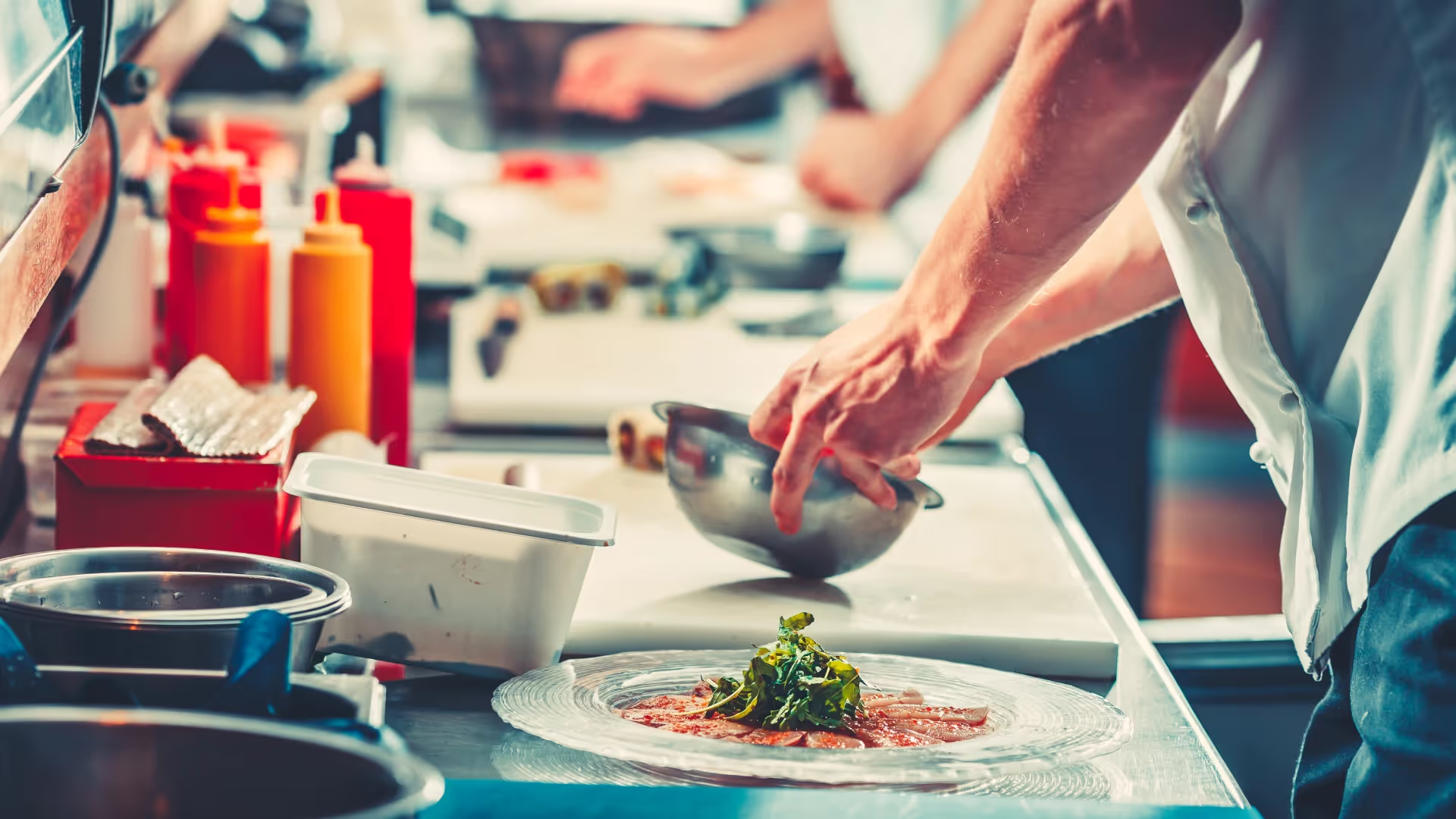
Let me paint you a picture. It's a Friday night. Your dining room is packed. The food is great, the vibe is right, and your reviews are solid. But somewhere between the kitchen and the table, things are just... slow. Tables are glancing at their phones. A couple near the window has been waiting 14 minutes for their entrees. And that family of four? They're not coming back.
Here's the thing most operators miss: speed of service isn't just an operational metric — it's a revenue driver. It affects table turns, tip averages, review scores, and whether a first-time guest becomes a regular. And yet, it rarely gets the same strategic attention as food costs or labor scheduling.
That's a mistake. A fixable one.
Why Speed of Service Actually Matters (The Numbers Don't Lie)
Customers are time-conscious in a way that's only gotten sharper post-pandemic. They have more options, less patience, and very vocal opinions on Yelp. Research published in the Journal of Retailing and Consumer Services found that perceived wait time has a direct, measurable impact on customer satisfaction — and critically, the perception of wait often matters more than the actual clock time.
Think about that for a second. You could shave 3 minutes off your average ticket time and still tank a guest's experience if they feel ignored during the wait. That's both a humbling and empowering insight — because it means speed of service is about systems and communication, not just kitchen throughput.
Meanwhile, in the drive-thru world, the pressure is even more acute. According to Restaurant Dive, Chick-fil-A leads drive-thru customer satisfaction despite not having the fastest raw times — because their service experience feels fast, friendly, and frictionless. That's the gold standard, and it's achievable at any scale.
What Is the Speed of Service in a Restaurant?
Speed of service (SOS) refers to the total time elapsed from when a customer places an order to when they receive it. But in practice, it's broader than that. It encompasses:
- Greeting time — how quickly a guest is acknowledged
- Order-taking time — how fast the order gets into the system
- Production time — kitchen throughput from ticket to plate
- Delivery time — how fast food reaches the guest once it's ready
- Check and payment time — especially relevant for table turns
Each of those phases has its own friction points. Knowing which one is your weakest link is step one.
The 30/30/30/10 Rule — And Why It's a Useful Starting Point
You may have heard of the 30/30/30/10 rule in restaurant operations. The idea: roughly 30% of service time should be spent on greeting and ordering, 30% on preparation, 30% on delivery and dining experience, and 10% on payment and departure. It's a rough framework, not a law — but it's useful for diagnosing where your operation is bleeding time.
Run through your own mental math. If your average table turn is 75 minutes and guests are spending 40 of those minutes waiting for food, something in that production phase is broken. That's not a hospitality problem — it's a systems problem.
How to Improve Speed of Service in a Restaurant: 6 Practical Moves
Alright, enough theory. Here's what actually moves the needle.
1. Audit Your Ticket Times — Honestly
You can't fix what you don't measure. Pull your POS data and look at average ticket times by daypart, by station, and by server. I'd wager there's at least one clear outlier — a lunch rush that's chronically slow, or a specific menu item that clogs the line every time it gets ordered. That data is gold.
2. Redesign Your Kitchen Station Layout
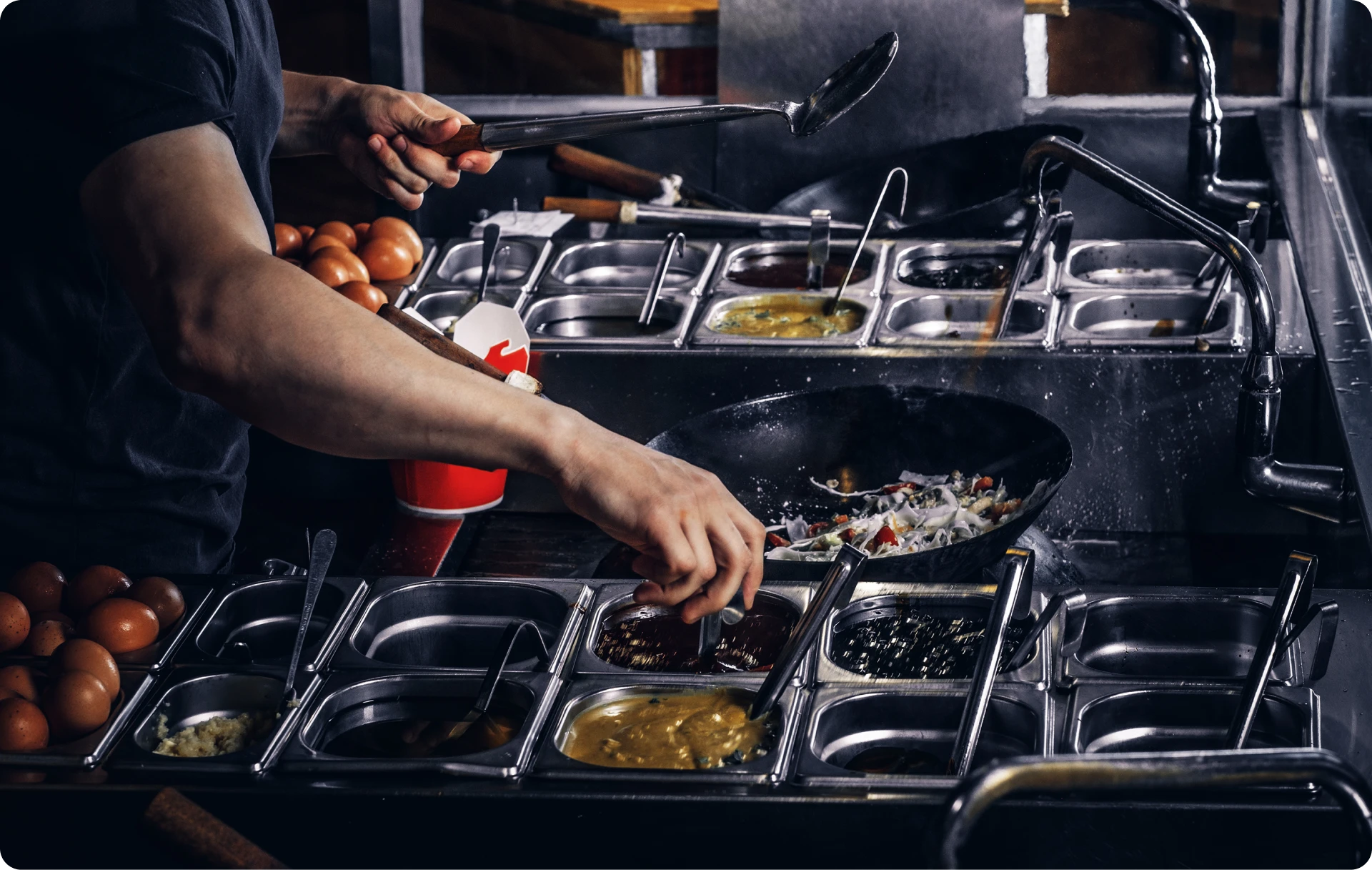
Kitchen flow is everything. If your line cooks are crossing paths to grab ingredients, or if the expo station is too far from the pass, you're burning seconds on every single ticket. A thoughtful station layout — where common prep items are within arm's reach and the flow moves in one direction — can cut production time significantly without adding a single staff member.
3. Apply the 2-Minute Rule at the Table
The 2-minute rule in restaurants is simple: within 2 minutes of a guest receiving their food, a server should check back to address any issues. This isn't just hospitality theater — it prevents guests from sitting with a wrong order or cold food for 10 minutes before flagging it, which tanks both their experience and your ticket accuracy.
4. Use Technology That Actually Speeds You Up
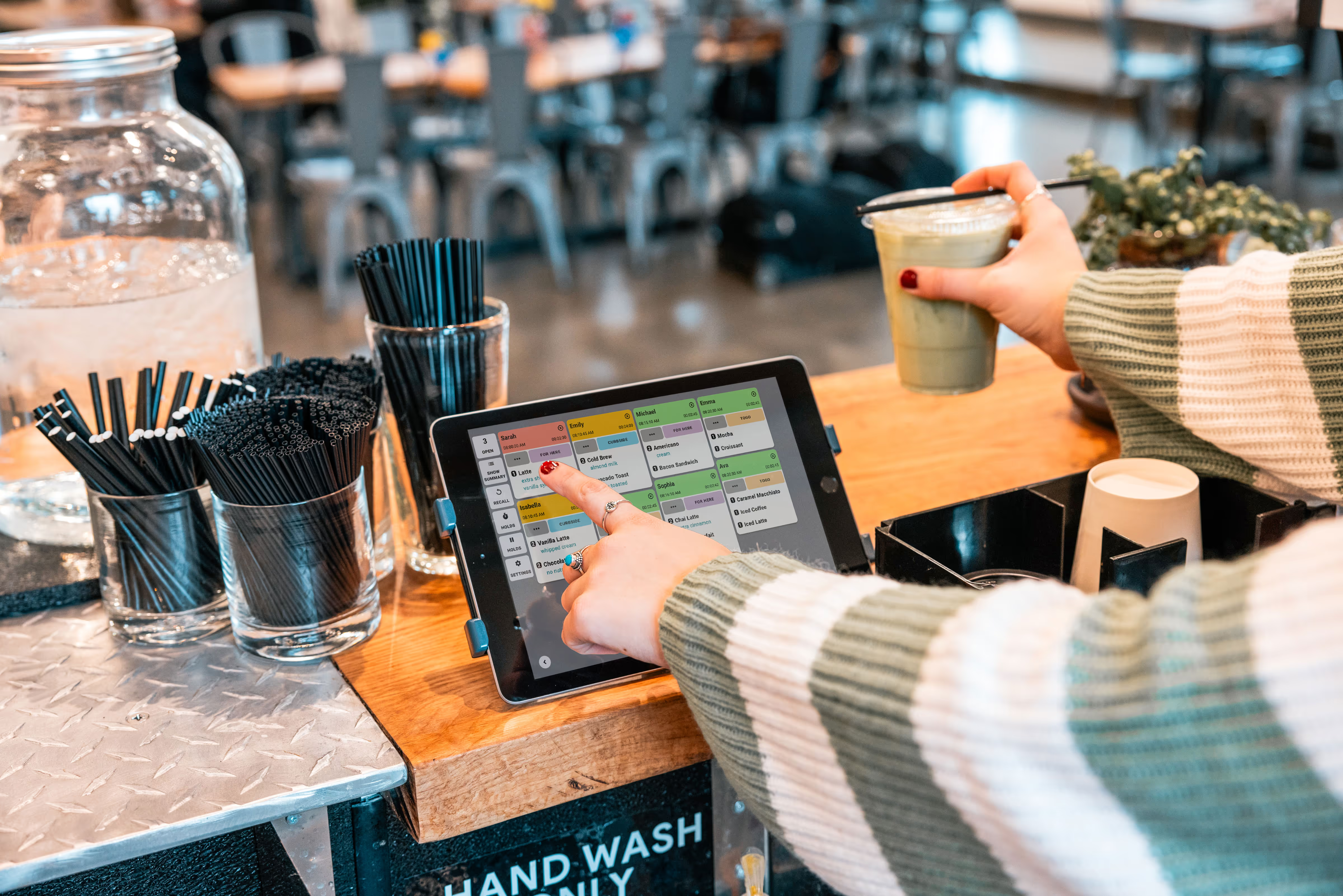
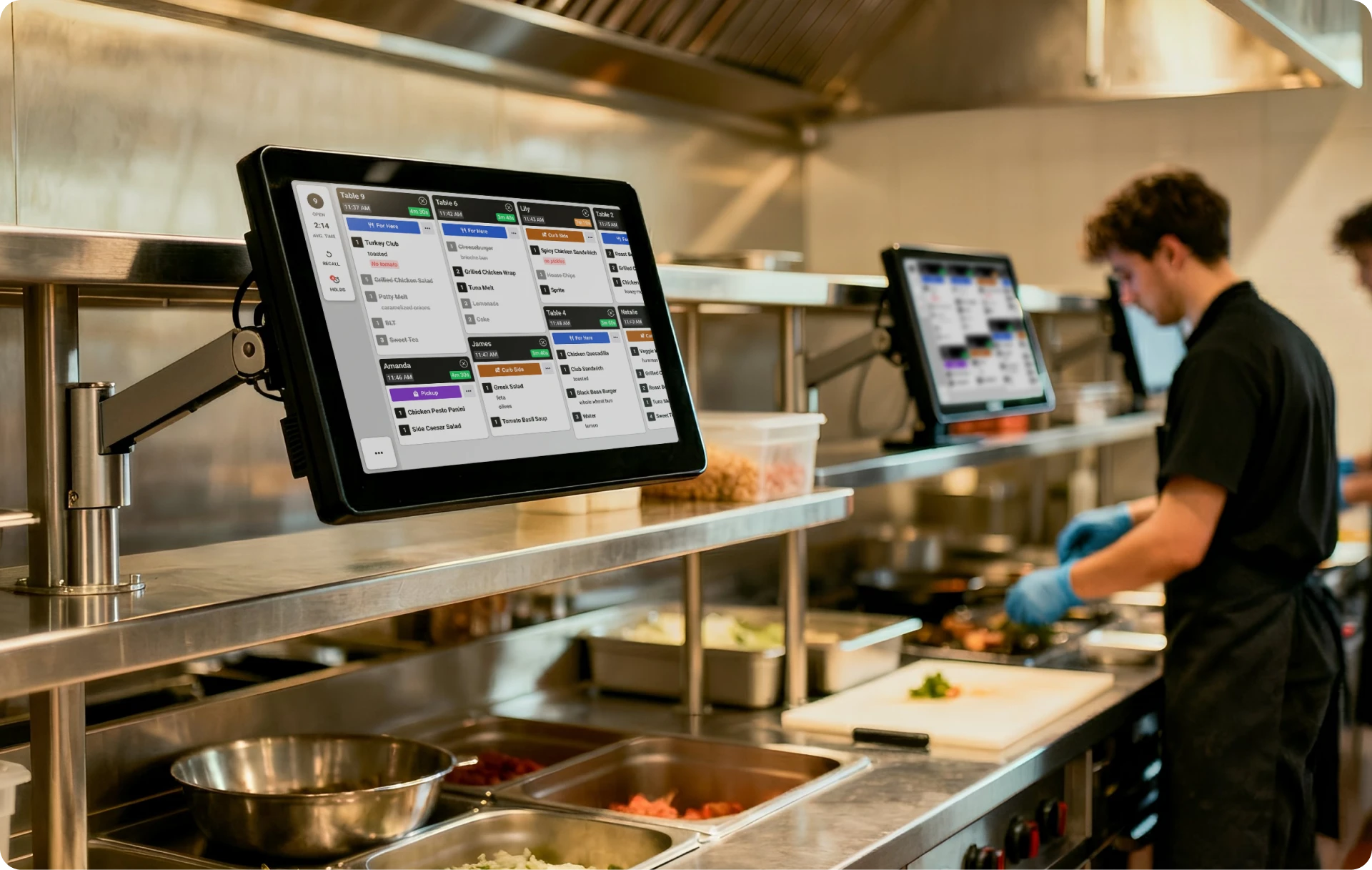
A kitchen display system (KDS) is the single highest-ROI technology investment most restaurants aren't using. Compared to paper tickets, a KDS routes orders to the right station instantly, tracks ticket times in real-time, and eliminates the "where did that ticket go?" chaos during a rush. It's also where tools like Fresh KDS shine — giving your kitchen a clear, organized view of the queue so nothing falls through the cracks.
5. Cross-Train Your Staff
Nothing kills service speed like a single point of failure. If only one person knows how to run the grill station, your Friday night is only as fast as that one person. Cross-training — even at a basic level — creates redundancy. It also keeps your team engaged and gives you flexibility when someone calls out sick at 4pm.
6. Pre-Shift Your Mise en Place Standards
I cannot overstate how much faster a kitchen runs when every station is set up identically before service. "Mise en place" isn't just a French cooking term — it's a philosophy. Everything in its place. Every station stocked the same way, every time. When your line cooks don't have to think about where things are, they can focus on cooking fast.
The Three C's of Restaurant Service (And How Speed Fits In)
When people ask about the three C's in a restaurant, they're usually referring to Consistency, Courtesy, and Cleanliness. Speed of service intersects with all three. Consistent ticket times build guest trust. Courteous communication during waits softens the experience. A clean, organized kitchen is a fast kitchen.
Speed without courtesy is just frantic. Courtesy without speed is just polite disappointment. The goal is both — and that only happens when your systems are dialed in.
Why Gen Z Is Raising the Stakes
Gen Z eats a lot of fast food — and they've grown up expecting near-instant service, mobile ordering, and real-time updates. They're now your fastest-growing customer segment. Their expectations aren't going to slow down to meet your current service times.
That means the restaurants that invest in speed infrastructure now — whether that's mobile ordering, KDS technology, or leaner kitchen workflows — are the ones who will own the next decade of customer loyalty in this segment.
Speed Is a Skill — And You Can Train It
One question that comes up a lot: is speed a skill or an ability? In the restaurant context, it's definitely a skill. It can be taught, practiced, and improved with the right systems. Your team isn't slow because they don't care — they're slow because they haven't been given the tools, training, and workflows to be fast.
That reframe matters. It means the problem is solvable. And the solution doesn't require a bigger kitchen, a larger team, or a six-figure renovation. It requires intentional systems, consistent training, and the right technology in place to support your people.
The Bottom Line
Speed of service is not glamorous. It doesn't show up on your menu. Guests don't Instagram it. But it is one of the most direct levers you have over customer satisfaction, table turns, and long-term revenue. And unlike a menu redesign or a dining room renovation, most of the improvements are low-cost and fast to implement.
The restaurants winning right now — the ones with loyal regulars, strong reviews, and growing revenue — aren't necessarily the ones with the best food. They're the ones where the experience is tight. Where things move. Where guests leave feeling like their time was respected.
That feeling starts in your kitchen. Build the systems to support it, and the growth will follow.
Ready to try Fresh KDS in your restaurant?




.png)


.webp)


