Fraud Blocker
All Blogs
Restaurant Tips

5 Ways To Improve Restaurant Efficiency

Restaurants can improve efficiency by implementing new technology, training employees well, improving communication, and creating systems and procedures.

ABOUT THIS RESTAURANT

Service Type

Locations:

Location

POS Used

See how Fresh KDS can impact your kitchen efficiency today.
Get started
Simplify your kitchen operations with Fresh KDS.
Get started — it's free

Running a restaurant is no easy task. There are so many things to think about: customer service, staffing, ordering and prepping the right amount of food, managing costs, and more. 

It can be tough keeping everything running smoothly and efficiently. We’ve put together a list of five ways restaurants can improve their efficiency and streamline operations, both of which have a direct impact on your bottom line. Read on for tips!

1. Prep for Success

Literally. Nothing slows down service more than scrambling to restock the line or waiting for a recipe to be prepped. An efficient shift starts with a thoughtful setup, which means ensuring your line, prep stations, and storage areas are fully stocked before the first order is placed. Beyond simply having products on hand, smart operators track par levels, rotate inventory properly, and verify that every workstation has the tools needed to work efficiently. This might include things like pre-portioning ramekins of sauces and salad dressings and making sure paper goods are stocked at the to-go station. 

A modern food & beverage management system can take this a step further by analyzing historical sales, usage patterns, and seasonality to help you determine exactly how much to prep before a shift. With accurate prep forecasts, you minimize the risk of running out of key items during a rush while also reducing over-production and food waste. Better inventory visibility not only protects margins but also empowers your kitchen staff to focus on consistency, speed, and execution.

Want to learn more about a KDS and how it works?

2. Leverage Efficient Restaurant Technology

Labor and staffing is a key part of the efficiency equation. You might actually be getting orders out quickly, but if you’re using too much labor to do it then you’re not utilizing your resources efficiently. An efficient kitchen is able to produce food while simultaneously reducing operational expenses (in this case mainly labor and lower food cost from eliminating waste). There are a number of technology solutions on the market that can help you operate more efficiently. 

  • Employee Scheduling Software. Scheduling the right number of labor hours at the right time of day means you’re neither overspending on labor nor shortchanging your guests with a poor experience. The best scheduling software takes into account historical trends and forecasts to recommend how many employees you need in what positions at all times. If you can maintain or lower your labor expense while processing the same number of orders, this improves your efficiency. 
  • Online Ordering. Online ordering platforms can help you sell more without needing to add human order takers. Online ordering can also boost your revenue per check, which is an added bonus. However, there is a risk that selling too much through online channels can overwhelm your kitchen. This is why you should look for online systems that can automatically reduce online ordering capacity when in-store demand is high. 
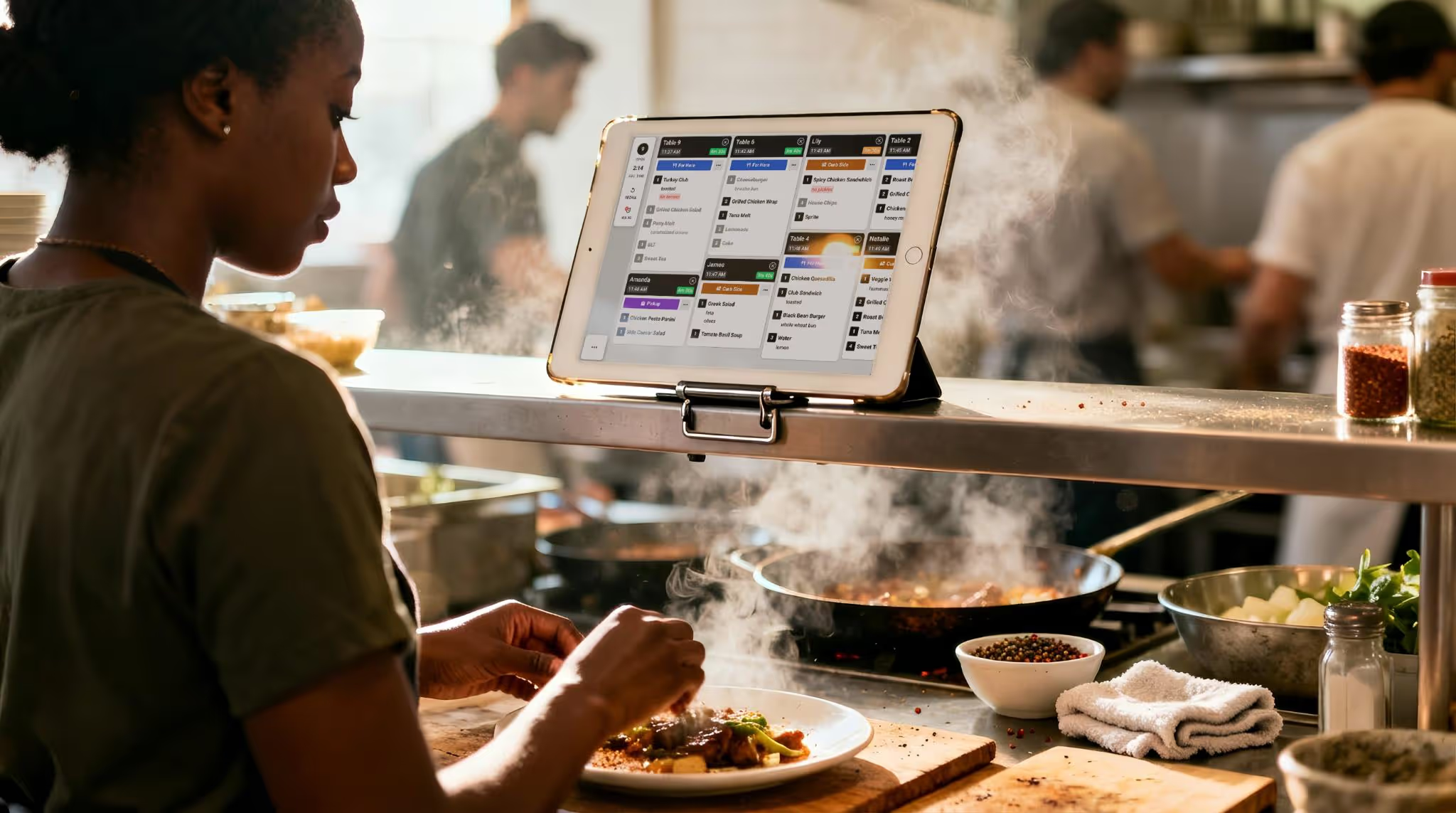
  • Kitchen Display System. A KDS can improve efficiency in a number of ways. A clear, easy-to-read display reduces errors, which means fewer re-makes slowing down the line. The timing elements on a KDS can also increase awareness and motivate staff to complete more orders “on time”, and advanced features like intelligent order sorting can automatically organize the queue to maximize the number of orders completed on time.
3. Training, Training & More Training

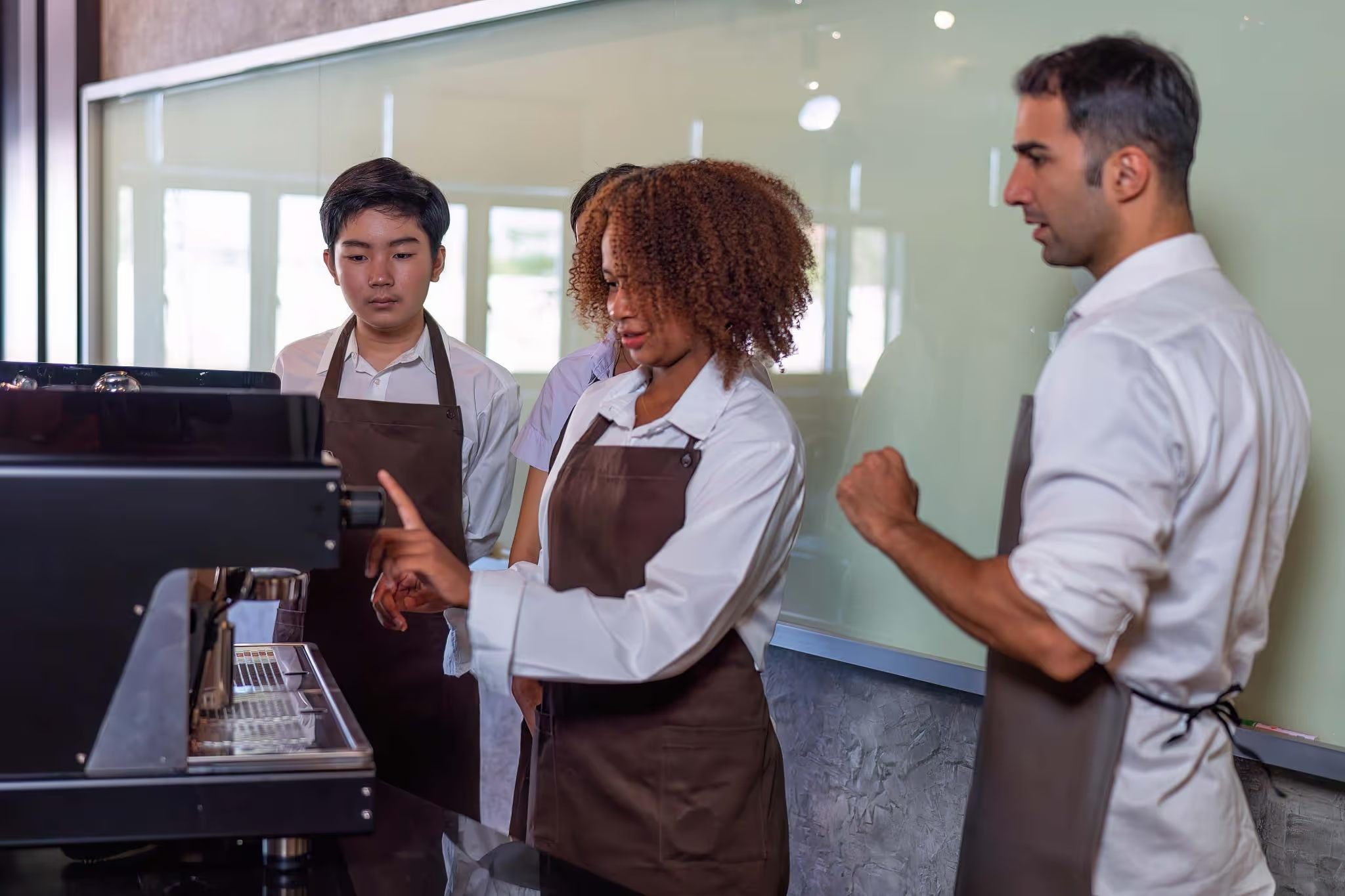
Having a well-trained staff is worth its weight in gold when it comes to efficiency. Every operator knows the impact of having a “10x” team member–the person who maintains calm under pressure, anticipates needs before they arise, and consistency performs at a higher level. While natural talent plays a role, most “10x” employees are created through thoughtful training, clear expectations, and ongoing skill development. 

Many restaurants provide a basic onboarding when someone is first hired, but the top-performing operations treat training as a continuous investment. This includes structured refreshers, coaching during real service, and intentional cross-training across stations so staff members understand the full workflow of the kitchen. Cross-training not only builds flexibility into your staffing model–helping you cover call-outs or unexpected rushes–it also deepens employees’ confidence and sense of ownership. 

Restaurants that reward employees for completing additional training or certifications amplify these benefits. Recognition, small bonuses, or opportunities for advancement encourage staff to expand their skill set, leading to higher consistency, smoother service, and reduced turnover. When employees feel supported and challenged, they’re far more likely to stay and far more likely to become high-impact contributors.
4. Create & Implement Systems

There’s a reason why all sorts of industries rely on checklists: because they work. You probably feel a lot safer getting on an airplane knowing it’s been through a thorough pre-flight safety checklist. Although running a restaurant isn’t the same as flying an airplane, you can use comparable systems to improve operations in your kitchen. 

  • Checklists. Create checklists for all repeatable tasks and then stick to them. You might have checklists for opening tasks, closing tasks, shift-change tasks, side work, health inspection, and line checks to name a few. 
  • Pre-portion when possible. Speed is critical during the rush, so look for opportunities to do pre-work where you can. Some examples of this might be pre-portioning to-go ramekins of sauces, ketchup, and dressings. Not only does this help with speed, but it also reduces food waste by making sure you don’t over portion. 
  • Optimize movements. If to-go orders need paper napkins then stock napkins need the to-go station, not across the kitchen. By looking for ways to reduce the amount of time employees have to move around the restaurant you’ll be increasing efficiency. Other examples of this include pre-bussing tables and carrying clean dishes back to the line every time you pass the dish station.

5. Focus on Communication

Clear, consistent communication is one of the most powerful drivers of efficiency in any restaurant. With so many moving parts–multiple stations, high guest expectations, and unpredictable rushes your team can only perform at its best when everyone understands what’s happening and what’s expected of them. Effective communication starts before service, with pre-shift meetings that review menu changes, 86’d items, staffing adjustments, special events, and sales goals. During service, tight communication between the front and back of house helps reduce errors, prevent bottlenecks, and keep ticket times on track. 

Ensuring each team member knows their role and responsibilities is just the foundation. High-performing kitchens also establish standard communication protocols: who calls the board, how modifications are read, when runners need to jump in, and how issues should be escalated. Ultimately, a well-communicating team feels more coordinated, confident, and supported. This creates a smoother workflow, fewer mistakes, and a more enjoyable work environment for everyone involved.

Could a digital kitchen display system help streamline operations and improve the customer experience?

December 26, 2026

5 Ways To Improve Restaurant Efficiency

Running a restaurant is no easy task. There are so many things to think about: customer service, staffing, ordering and prepping the right amount of food, managing costs, and more. 

It can be tough keeping everything running smoothly and efficiently. We’ve put together a list of five ways restaurants can improve their efficiency and streamline operations, both of which have a direct impact on your bottom line. Read on for tips!

1. Prep for Success

Literally. Nothing slows down service more than scrambling to restock the line or waiting for a recipe to be prepped. An efficient shift starts with a thoughtful setup, which means ensuring your line, prep stations, and storage areas are fully stocked before the first order is placed. Beyond simply having products on hand, smart operators track par levels, rotate inventory properly, and verify that every workstation has the tools needed to work efficiently. This might include things like pre-portioning ramekins of sauces and salad dressings and making sure paper goods are stocked at the to-go station. 

A modern food & beverage management system can take this a step further by analyzing historical sales, usage patterns, and seasonality to help you determine exactly how much to prep before a shift. With accurate prep forecasts, you minimize the risk of running out of key items during a rush while also reducing over-production and food waste. Better inventory visibility not only protects margins but also empowers your kitchen staff to focus on consistency, speed, and execution.

Want to learn more about a KDS and how it works?

2. Leverage Efficient Restaurant Technology

Labor and staffing is a key part of the efficiency equation. You might actually be getting orders out quickly, but if you’re using too much labor to do it then you’re not utilizing your resources efficiently. An efficient kitchen is able to produce food while simultaneously reducing operational expenses (in this case mainly labor and lower food cost from eliminating waste). There are a number of technology solutions on the market that can help you operate more efficiently. 

  • Employee Scheduling Software. Scheduling the right number of labor hours at the right time of day means you’re neither overspending on labor nor shortchanging your guests with a poor experience. The best scheduling software takes into account historical trends and forecasts to recommend how many employees you need in what positions at all times. If you can maintain or lower your labor expense while processing the same number of orders, this improves your efficiency. 
  • Online Ordering. Online ordering platforms can help you sell more without needing to add human order takers. Online ordering can also boost your revenue per check, which is an added bonus. However, there is a risk that selling too much through online channels can overwhelm your kitchen. This is why you should look for online systems that can automatically reduce online ordering capacity when in-store demand is high. 
  • Kitchen Display System. A KDS can improve efficiency in a number of ways. A clear, easy-to-read display reduces errors, which means fewer re-makes slowing down the line. The timing elements on a KDS can also increase awareness and motivate staff to complete more orders “on time”, and advanced features like intelligent order sorting can automatically organize the queue to maximize the number of orders completed on time.

3. Training, Training & More Training

Having a well-trained staff is worth its weight in gold when it comes to efficiency. Every operator knows the impact of having a “10x” team member–the person who maintains calm under pressure, anticipates needs before they arise, and consistency performs at a higher level. While natural talent plays a role, most “10x” employees are created through thoughtful training, clear expectations, and ongoing skill development. 

Many restaurants provide a basic onboarding when someone is first hired, but the top-performing operations treat training as a continuous investment. This includes structured refreshers, coaching during real service, and intentional cross-training across stations so staff members understand the full workflow of the kitchen. Cross-training not only builds flexibility into your staffing model–helping you cover call-outs or unexpected rushes–it also deepens employees’ confidence and sense of ownership. 

Restaurants that reward employees for completing additional training or certifications amplify these benefits. Recognition, small bonuses, or opportunities for advancement encourage staff to expand their skill set, leading to higher consistency, smoother service, and reduced turnover. When employees feel supported and challenged, they’re far more likely to stay and far more likely to become high-impact contributors.

4. Create & Implement Systems

There’s a reason why all sorts of industries rely on checklists: because they work. You probably feel a lot safer getting on an airplane knowing it’s been through a thorough pre-flight safety checklist. Although running a restaurant isn’t the same as flying an airplane, you can use comparable systems to improve operations in your kitchen. 

  • Checklists. Create checklists for all repeatable tasks and then stick to them. You might have checklists for opening tasks, closing tasks, shift-change tasks, side work, health inspection, and line checks to name a few. 
  • Pre-portion when possible. Speed is critical during the rush, so look for opportunities to do pre-work where you can. Some examples of this might be pre-portioning to-go ramekins of sauces, ketchup, and dressings. Not only does this help with speed, but it also reduces food waste by making sure you don’t over portion. 
  • Optimize movements. If to-go orders need paper napkins then stock napkins need the to-go station, not across the kitchen. By looking for ways to reduce the amount of time employees have to move around the restaurant you’ll be increasing efficiency. Other examples of this include pre-bussing tables and carrying clean dishes back to the line every time you pass the dish station.

5. Focus on Communication

Clear, consistent communication is one of the most powerful drivers of efficiency in any restaurant. With so many moving parts–multiple stations, high guest expectations, and unpredictable rushes your team can only perform at its best when everyone understands what’s happening and what’s expected of them. Effective communication starts before service, with pre-shift meetings that review menu changes, 86’d items, staffing adjustments, special events, and sales goals. During service, tight communication between the front and back of house helps reduce errors, prevent bottlenecks, and keep ticket times on track. 

Ensuring each team member knows their role and responsibilities is just the foundation. High-performing kitchens also establish standard communication protocols: who calls the board, how modifications are read, when runners need to jump in, and how issues should be escalated. Ultimately, a well-communicating team feels more coordinated, confident, and supported. This creates a smoother workflow, fewer mistakes, and a more enjoyable work environment for everyone involved.

Could a digital kitchen display system help streamline operations and improve the customer experience?

Switch to Fresh KDS with confidence

Follow this step-by-step guide for a quick and stress-free switch from Square KDS to Fresh KDS.

Why Speed of Service Matters

See why speed and consistency are key to restaurant success, improving guest satisfaction, revenue, and efficiency.

Get started for free.

Begin your Fresh KDS 7-day trial today by setting up your account. The process is completely free, and only takes a few minutes. No credit card is needed, and you can cancel anytime.

Get started - it's free
Boosting kitchen EFFICIENCY at