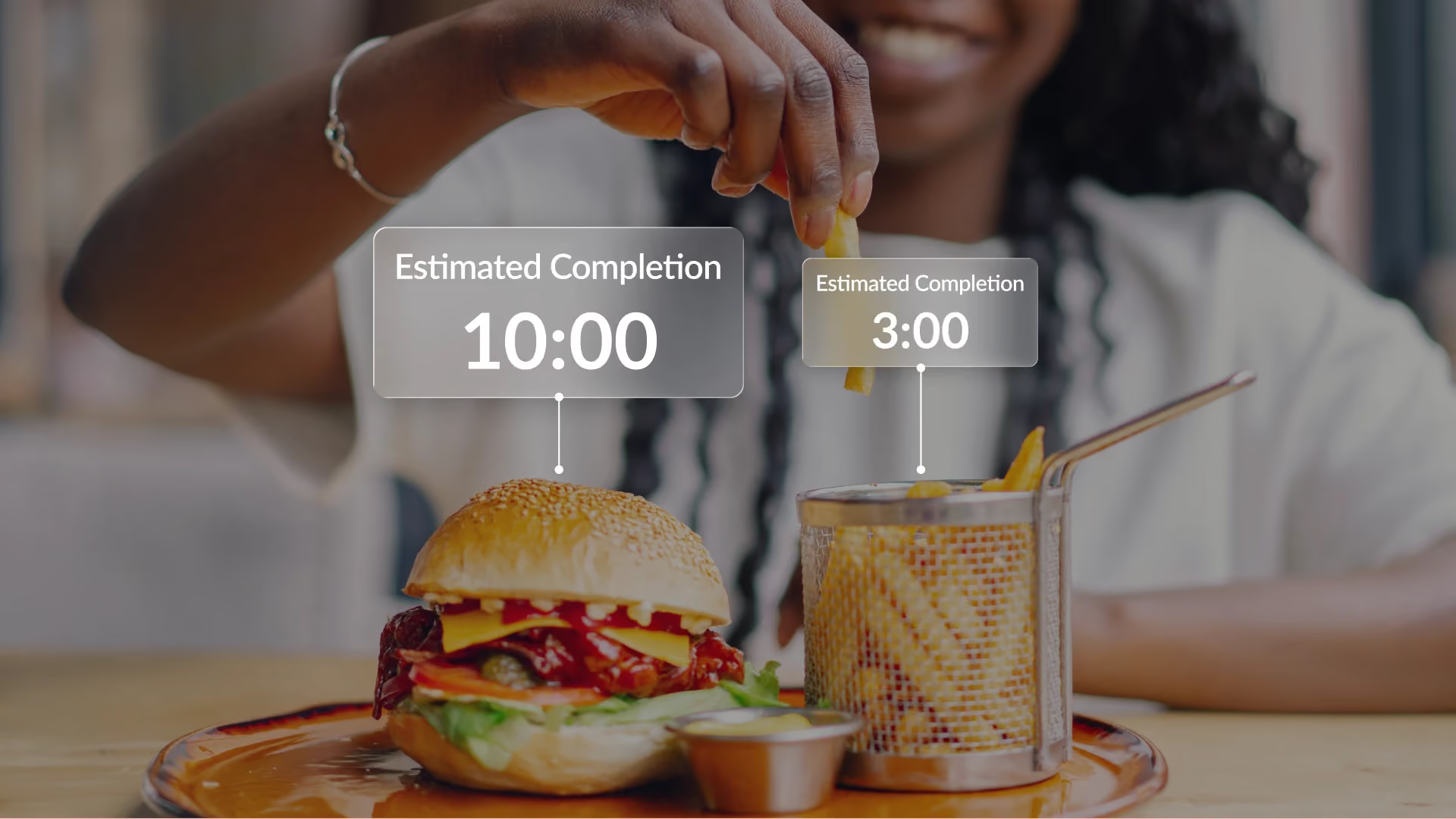
When you hear “speed of service” it’s natural to think the conversation is about going faster. The truth in restaurant kitchens is that most of the time the goal isn’t to go faster. The goal is to meet the guests’ expectations for timing, accuracy, and food quality. When it comes to orders with multiple items, timing and food quality are often inextricably linked.
The item completion gap
Most orders have more than one item, which are often prepared at different stations. The delta between when the first item on the order is ready and when the last item on the order is ready is the item completion gap. The items that were ready faster can sit in the window dying while waiting on the rest of the order. While the overall order might be technically on time, the quality of the food will suffer if the item completion gap is too wide.
Item timing is the discipline of managing the coordination of items directly: making sure every item on an order is timed to be ready at the same moment and treating the gap between the first item ready and the last time ready as the thing to shrink.
The problem with static timing
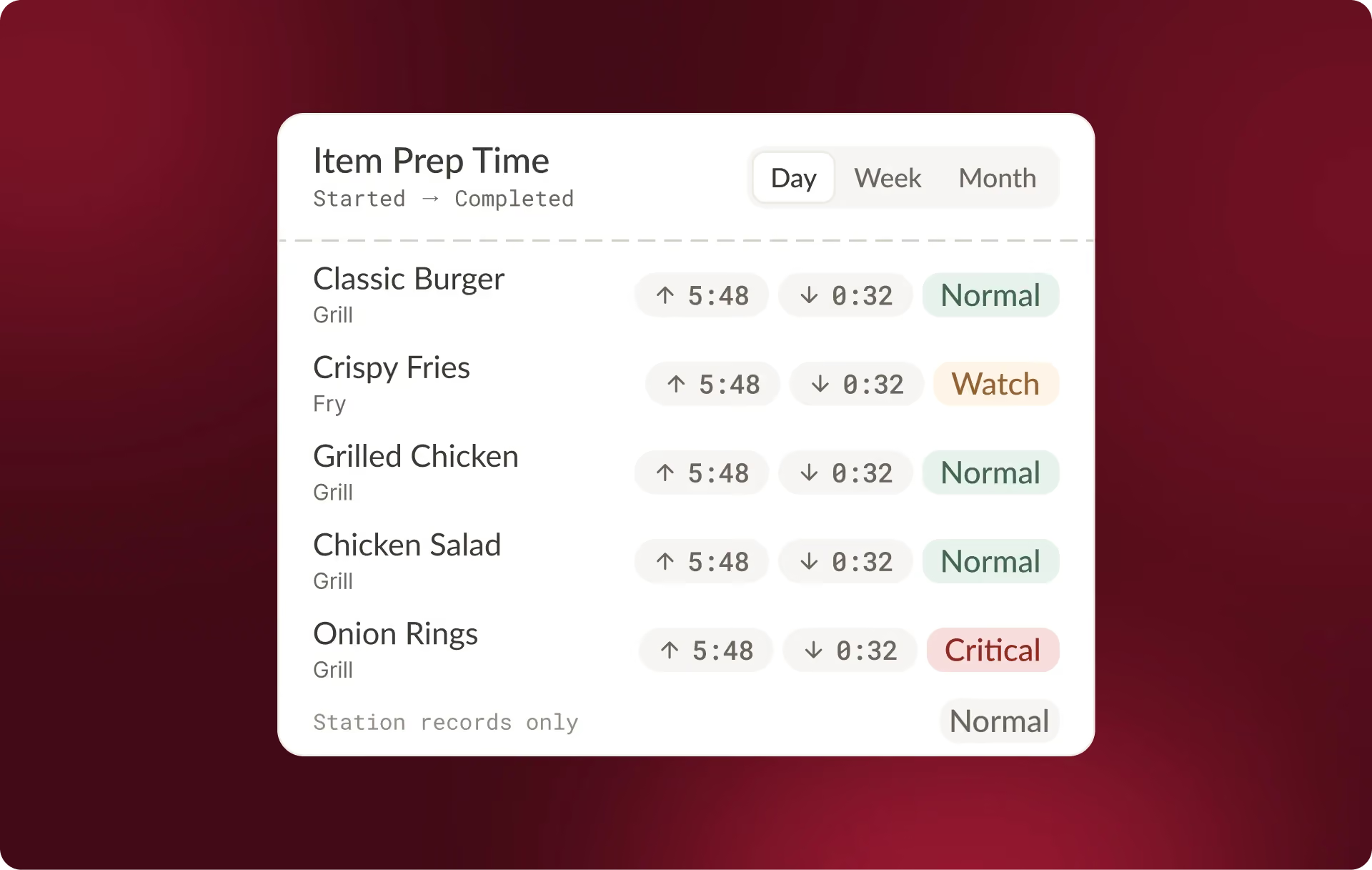
The way to close the gap is to stagger when items are fired so items that take longer to prepare are fired first. The challenge with this simple approach is that how long it takes to prepare an item can vary widely depending on things like the station’s current volume, how many items are already on the grill, or if you’re waiting for a prep recipe to come out of the oven. The way to solve this is to start by measuring it, which is what Fresh KDS’s new Intelligent Item Timing metrics will do.
Four ways to see what's happening at the item level
Intelligent Item Timing introduces four metrics that measure timing below the order, at the item and station level:
- Station Queue Delay is how long items wait at a station before anyone starts on it. In an ideal world every station starts on items as soon as they are fired, but in reality each station will have a different delay when the restaurant gets busy. How long items wait in the queue before they are started is often the biggest factor in making an item (and the order) late.
- Item Prep Time is how long an item actually takes to cook at a station. It's the real cook time for that item on that ticket, not a menu estimate, and it does vary. Knowing the typical range of an item gives you more valuable information than a single number.
- Item Completion Variance is how far apart the items on one order finish from each other. This is the number that directly measures the item completion gap: a high variance means items are landing minutes apart, even if the order is sold “on time”.
- Expo Dwell Time is how long a finished order sits at expo before it is sold. It tells you if the expo station is the bottleneck.
None of these numbers exist at the order level. They only show up when you measure the item.
The customer experience
Even an on time order might not deliver a great guest experience if some of the items in that order were cold. The Fresh KDS item timing metrics were built to surface that guest specifically, the one whose order had the widest gap between its fastest and slowest items, so a kitchen can see the pattern before it shows up in a review.
Where this fits
This isn't about cooking faster. It's about seeing what happens between when an order comes in and when it actually reaches the guest, item by item, station by station. The promise every restaurant makes is that the entire order will be ready when it's supposed to be, not just quickly, or item by item. Item-level visibility reveals whether the promise to the guest is actually being kept by the kitchen.
If you want to see how item-level timing works on a real kitchen screen, we'll be showcasing Intelligent Item Timing and Performance Metrics at FS/TEC 2026, booth 429/528. Come by and see how it works in real time.



.png)


.webp)


