Fraud Blocker
All Blogs
Restaurant Tips

The promise every restaurant makes at the register

Restaurant loyalty hinges on whether orders arrive on time — not on shift averages. See why the kitchen remains the last unmeasured room in foodservice.

ABOUT THIS RESTAURANT

Service Type

Locations:

Location

POS Used

See how Fresh KDS can impact your kitchen efficiency today.
Get started
Simplify your kitchen operations with Fresh KDS.
Get started — it's free

Every time a guest places an order, the restaurant makes a promise. Sometimes it's spoken, like a quoted pickup time. Sometimes it's unspoken, like the few minutes a regular guest expects between ordering a coffee and having it in their hands. The guest is always keeping time, even when no one behind the counter is.

That promise is where loyalty is decided. Roughly sixty percent of restaurant revenue comes from guests who return. And the second largest driver of whether they return, after the food itself, is whether their order arrived when they expected it. They don't decide to return based on an average wait time across the shift; their choice to return is based on their wait for their order.
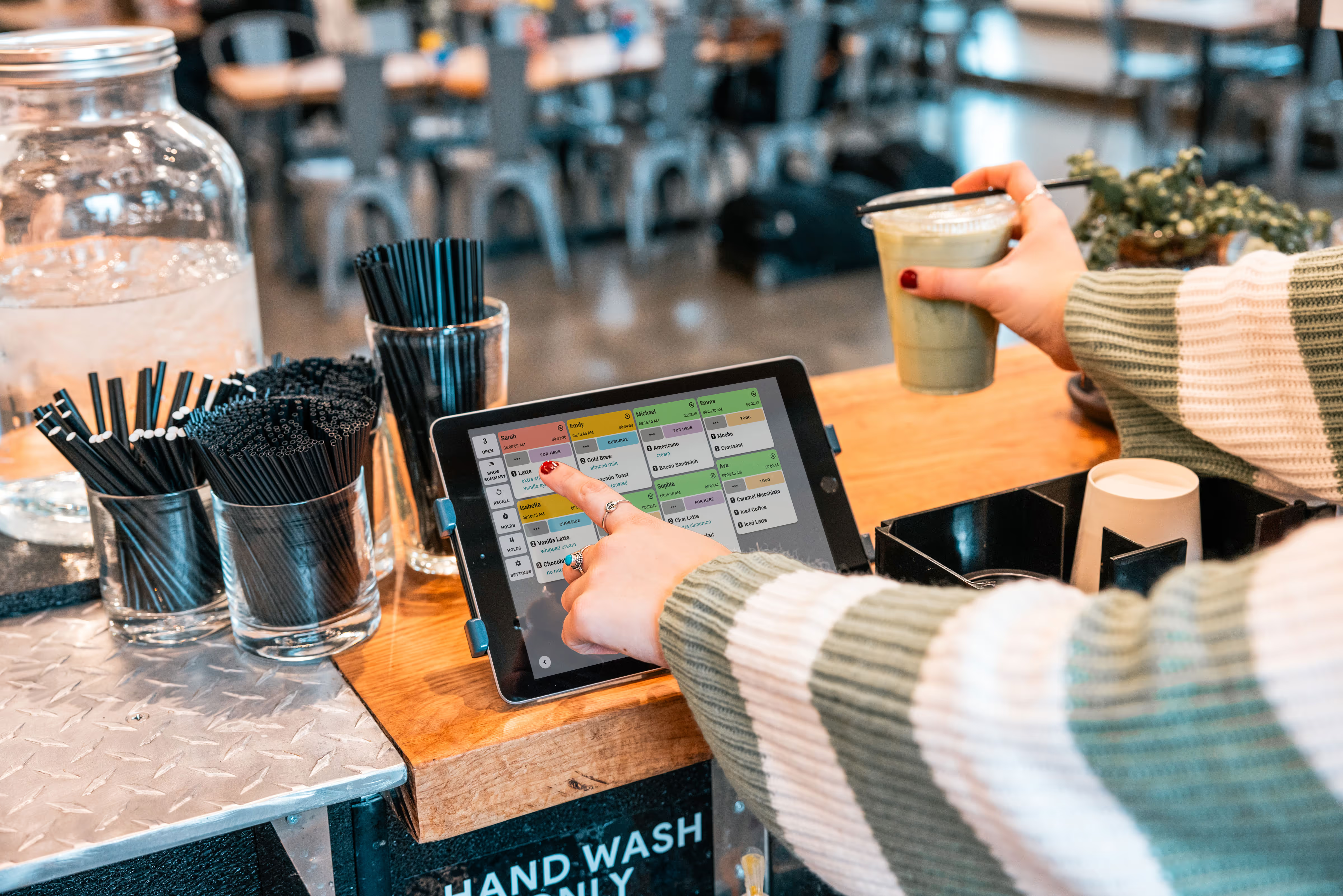
Serve every order on time

The trouble with averages

Here's the trouble with averages. Averages don't wait in line. Guests do. A ten minute kitchen can still hand a guest a twenty minute ticket, and that 20 minute wait is the only number that the guest remembers. The worst version of this is the guest who waits too long, says nothing, and simply comes back less often, or not at all. The number on the dashboard looks fine while the business slowly thins out underneath it.

The kitchen: the last unmeasured room

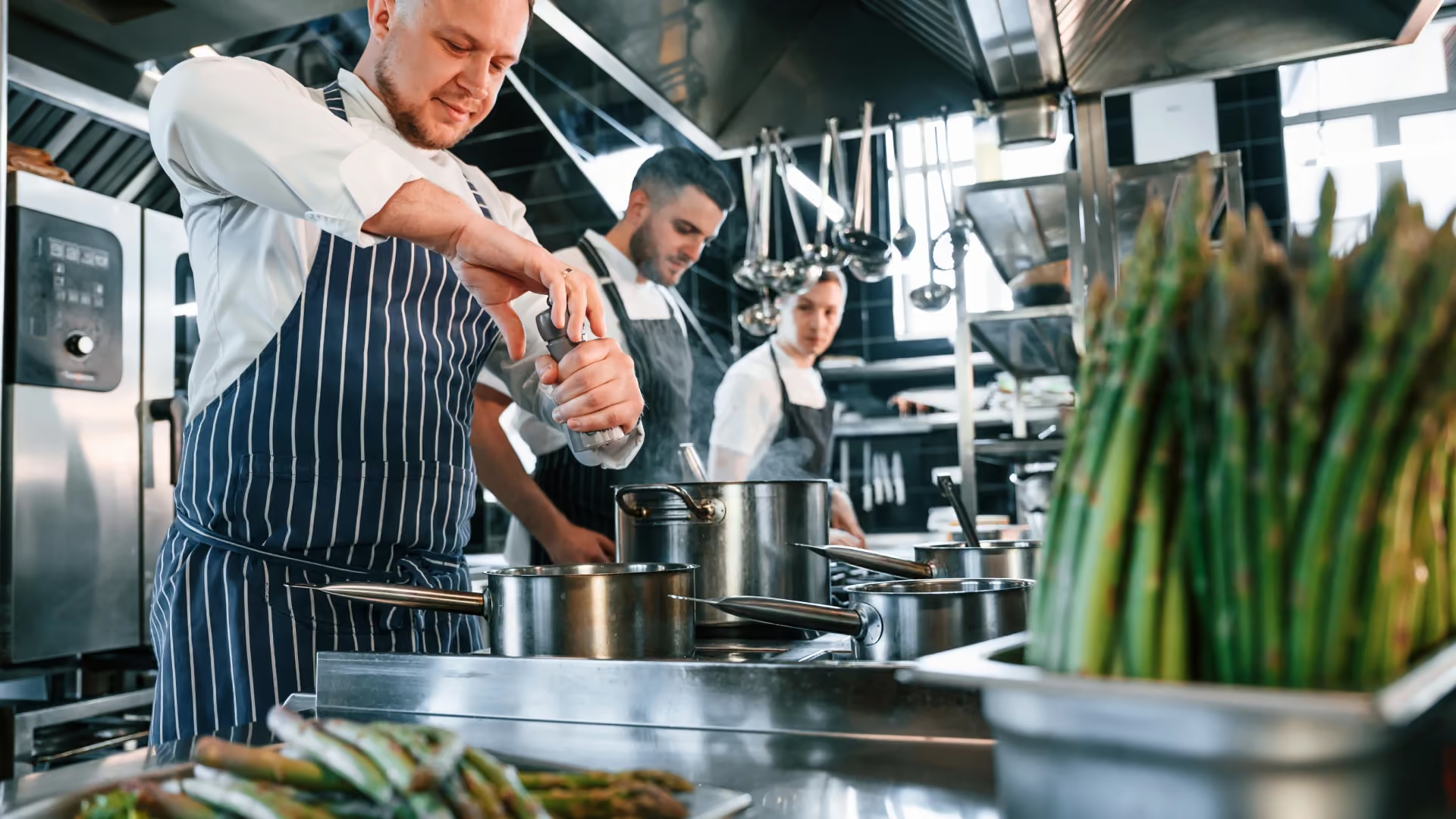
Most parts of a restaurant already produce a record you can act on. The point of sale knows what was ordered, through which channel, and for how much. Labor systems know who was on the clock. The one place that has remained in the dark is the kitchen, the exact place where the promise is kept or broken. For thirty years, the kitchen has been managed by walking the line, counting tickets, and trusting the memory of the most experienced person on the shift. When that person leaves, the knowledge leaves with them.

Redefining speed of service: on time, not just fast

This is why we talk about speed of service differently than the rest of the industry does. Most operators use the phrase in the context of "faster." When we reference speed of service, we mean "on time." "On time" applies to the dine-in guest who expects their order within eight minutes, the pickup order quoted a 5:30 time that shouldn't be cold at 5:20 or forgotten at 5:45, and the drive-thru guest during lunch rush. "Faster" cannot describe all three. "On time" can, and it's the only frame that treats every channel by the same standard the guest actually uses.

What's coming: the proof at FS/TEC 2026

Over the next several weeks, we're going to make the case, and then we're going to show the proof at FS/TEC 2026, September 23–25 in Grapevine, TX. The case is simple to state and harder to live by: the kitchen is the foundation on which a restaurant succeeds or fails. The promise to the guest is kept or broken there. And for the first time, that promise can be measured for every order rather than guessed at in aggregate.

The kitchen has been the last unmeasured room in the restaurant. Until now. And that's about to change.

Ready to try Fresh KDS in your restaurant?

July 1, 2026

The promise every restaurant makes at the register

Every time a guest places an order, the restaurant makes a promise. Sometimes it's spoken, like a quoted pickup time. Sometimes it's unspoken, like the few minutes a regular guest expects between ordering a coffee and having it in their hands. The guest is always keeping time, even when no one behind the counter is.

That promise is where loyalty is decided. Roughly sixty percent of restaurant revenue comes from guests who return. And the second largest driver of whether they return, after the food itself, is whether their order arrived when they expected it. They don't decide to return based on an average wait time across the shift; their choice to return is based on their wait for their order.

Serve every order on time

The trouble with averages

Here's the trouble with averages. Averages don't wait in line. Guests do. A ten minute kitchen can still hand a guest a twenty minute ticket, and that 20 minute wait is the only number that the guest remembers. The worst version of this is the guest who waits too long, says nothing, and simply comes back less often, or not at all. The number on the dashboard looks fine while the business slowly thins out underneath it.

The kitchen: the last unmeasured room

Most parts of a restaurant already produce a record you can act on. The point of sale knows what was ordered, through which channel, and for how much. Labor systems know who was on the clock. The one place that has remained in the dark is the kitchen, the exact place where the promise is kept or broken. For thirty years, the kitchen has been managed by walking the line, counting tickets, and trusting the memory of the most experienced person on the shift. When that person leaves, the knowledge leaves with them.

Redefining speed of service: on time, not just fast

This is why we talk about speed of service differently than the rest of the industry does. Most operators use the phrase in the context of "faster." When we reference speed of service, we mean "on time." "On time" applies to the dine-in guest who expects their order within eight minutes, the pickup order quoted a 5:30 time that shouldn't be cold at 5:20 or forgotten at 5:45, and the drive-thru guest during lunch rush. "Faster" cannot describe all three. "On time" can, and it's the only frame that treats every channel by the same standard the guest actually uses.

What's coming: the proof at FS/TEC 2026

Over the next several weeks, we're going to make the case, and then we're going to show the proof at FS/TEC 2026, September 23–25 in Grapevine, TX. The case is simple to state and harder to live by: the kitchen is the foundation on which a restaurant succeeds or fails. The promise to the guest is kept or broken there. And for the first time, that promise can be measured for every order rather than guessed at in aggregate.

The kitchen has been the last unmeasured room in the restaurant. Until now. And that's about to change.

Ready to try Fresh KDS in your restaurant?

Switch to Fresh KDS with confidence

Follow this step-by-step guide for a quick and stress-free switch from Square KDS to Fresh KDS.

Why Speed of Service Matters

See why speed and consistency are key to restaurant success, improving guest satisfaction, revenue, and efficiency.

Get started for free.

Begin your Fresh KDS 7-day trial today by setting up your account. The process is completely free, and only takes a few minutes. No credit card is needed, and you can cancel anytime.

Get started - it's free
Boosting kitchen EFFICIENCY at