What We Heard at the National Restaurant Association Show 2026
There is a certain energy at a conference when an industry is about to shift. You can feel it in the hallways before anyone says it out loud. That was our experience at the NRA Show 2026 and this year felt different. Not because of the robotics demos or the AI on every booth wall, and not because of any new Fresh KDS features and enhancements.
It felt different because the idea that the kitchen is the center of the operation finally moved to the front of the conversation: in sessions, in booth meetings, at the social events, standing in the coffee line, and waiting at the airport to catch the next flight home.
We do not mean the kitchen in the culinary sense: the menu, the craft, the chef’s vision. Those conversations have always had a home at NRA. What we mean is the kitchen as the operational reality of what happens between the moment an order is placed and the moment a guest receives it. The kitchen is the last part of the restaurant most operators still cannot measure. Everyone in the building knows it. This year, the industry started saying it out loud.
That reality, what was produced, at which station, in what time, with what accuracy, has been invisible to most operators for most of the industry’s history. The POS knows what was ordered. The loyalty platform knows whether the guest came back. The gap in between, the few minutes when the kitchen is doing its work, has lived outside the data. Until now.
The Gap the Industry Is Finally Naming
Every meaningful kitchen technology conversation at the show was circling the same gap, even when no one named it directly. Your POS knows what was ordered, when, by whom, and for how much. It is a good record of demand. Your labor system knows who was scheduled and what they cost. It is a good record of input.
What neither system knows is what the kitchen actually produced in between. Not the ticket that closed in the POS. Fresh KDS knows what happened next: which station handled which part of which order, in what sequence, with what timing, and whether the result reached the guest on time.
That is where guest experience is made or lost. It is where margin holds or slips. And for most of the industry’s history, it has sat outside the data.
The reason this matters is practical. You cannot improve what you cannot measure. You can invest in training, equipment, and talent, and those investments matter, but without a record of what the kitchen produced, you are working from intuition and hoping it lands.
The operators we spoke with who have built kitchen performance data into how they run describe something we hear often from Fresh KDS customers. The shift from intuition to measurement does not feel like adding another tool. It feels like turning on a light.
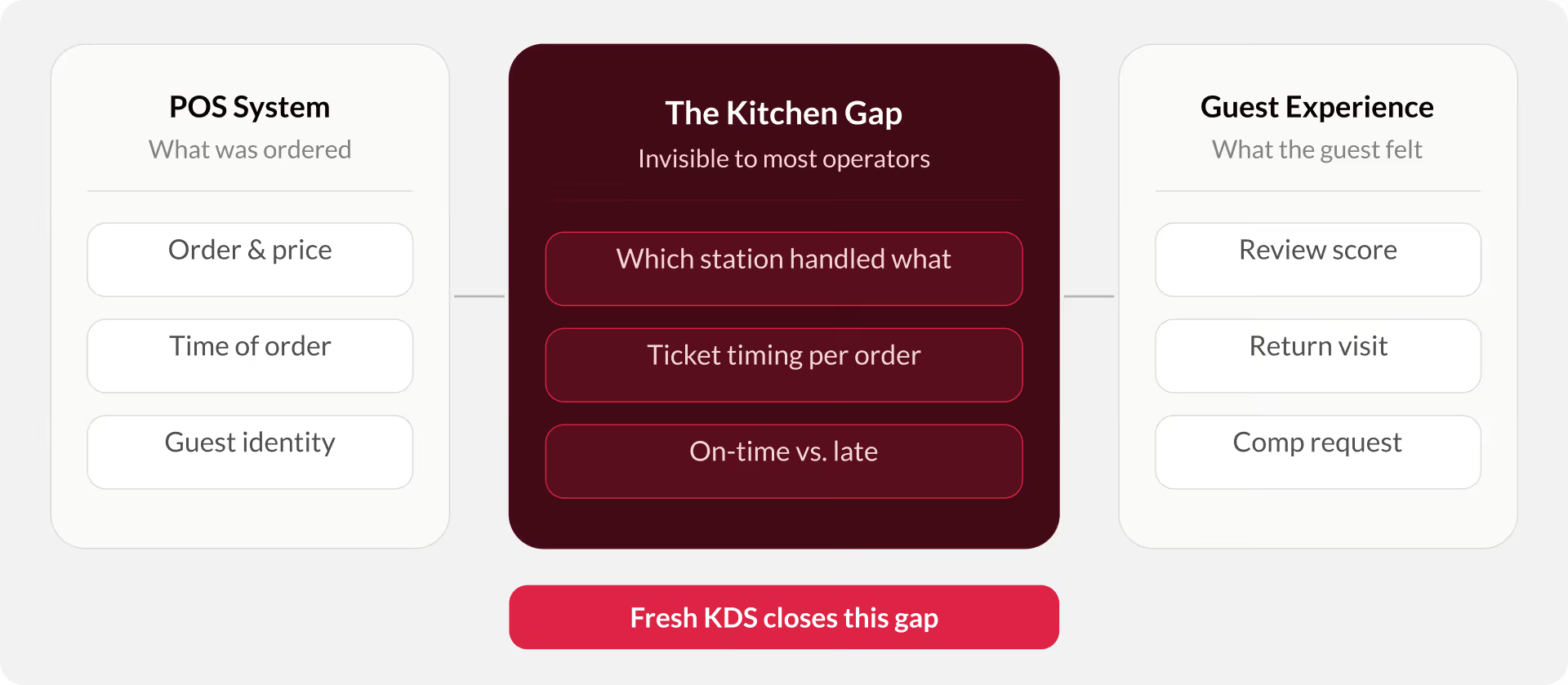
And the metric that really matters isn’t average ticket time. Guest don’t experience averages. They experience what meets or exceeds their expectations. Average ticket time only tells you how long orders took. On-time orders tell you what your guests experienced. The difference between those two numbers is where the best operators find their next improvement.
Why This Year Felt Different
KDS systems have been on show floors for years. So why does this year feel like a turning point? We see three reasons.
1. The AI kitchen story needs a foundation.
For two years, a lot of the restaurant technology conversation has been about AI-driven kitchen automation: robotic lines, predictive prep, automated ordering. That promise is real, and the timeline is getting closer. But every one of those applications needs the same thing to work: a record of what the kitchen actually did, when, and with what result. Without that data, there is nothing for the AI to learn from or respond to.
The operators building that record now are the ones whose kitchens will be ready when the automation arrives. This is where a real system of intelligence for the kitchen starts, rather than adding AI for its own sake.
2. The labor math has changed for good.
Staffing pressure in foodservice is not a temporary, post-pandemic problem. It is the operating environment. The operators holding service quality steady with leaner teams are, almost without exception, the ones who have made their kitchen’s performance visible. They can see where the team is falling behind before the guest feels it.
When you can see where production is slipping, you can respond. When you cannot, you find out from a review.
3. The cost of entry has dropped.
The old barriers to kitchen performance data, hardware cost, install complexity, and integrating with older POS systems, have come down a lot. The conversations at NRA this year were not about whether this is feasible; they were about what to do with it now that it is. That move, from feasibility to strategy, is usually the sign that a category has crossed a line.
What This Means for Your Operation
The operations sessions this year were describing a specific future: one where the meaningful decisions about a kitchen are informed by station-level performance data, in real time or close to it. That future is not a decade out. Operators are building toward it now.
The gap between your best shift and your average shift is not random. It has a pattern. And this is the monumental opportunity: kitchen performance data helps you find it, and gives your team what they need to close it.
If your kitchen’s performance is not something you can trend, compare, and act on, you are running it on intuition. That works, and many strong operators do it well. But it has a ceiling. The ceiling is the shift manager’s read on the nights they are there. It is the aggregate report that smooths out the variance. It is not knowing, until after service is over, whether a station, a channel, or a time window created a guest experience that did not match what you intended.
Fresh KDS is the foundation built for that. We focus on on-time orders, not average ticket time. We capture a record at the station level, not a summary at the end of the shift. And we give operators a clear view of what their kitchen is actually producing, with the insight to make it better.
That is the gap the industry is finally closing: the ability to see it before it goes wrong, instead of after.
The kitchen is the center of the conversation now, the way it probably always should have been. And it’s about time.
Ready to try Fresh KDS in your restaurant?




.png)


.webp)


