Fraud Blocker
All Blogs
Restaurant Tips

The only 3 things you need to get right to run a successful restaurant

The only 3 things you need to run a successful restaurant: great food, real value, and consistent, on-time service that meets guest expectations.

ABOUT THIS RESTAURANT

Service Type

Locations:

Location

POS Used

See how Fresh KDS can impact your kitchen efficiency today.
Get started
Simplify your kitchen operations with Fresh KDS.
Get started — it's free

Running a restaurant isn’t easy. The industry is notorious for lower margins and high failure rates. Despite the difficulty involved in running a restaurant, however,  it isn’t actually that complex. When you zoom out and look at how restaurants make money and how consumers make choices, there are really only three things you have to get right to have a successful restaurant. 

Serve food that customers crave

The first is making food that tastes good and that people want to eat. There’s no sugar-coating it–if your food isn’t good, your restaurant won’t last very long. (And if your food isn’t great you actually might want to try sugar-coating it.) When it comes to choosing where to eat, consumers are being led by their taste buds. If you serve up delicious, tantalizing, mouth watering dishes a lot of other sins will be forgiven. 
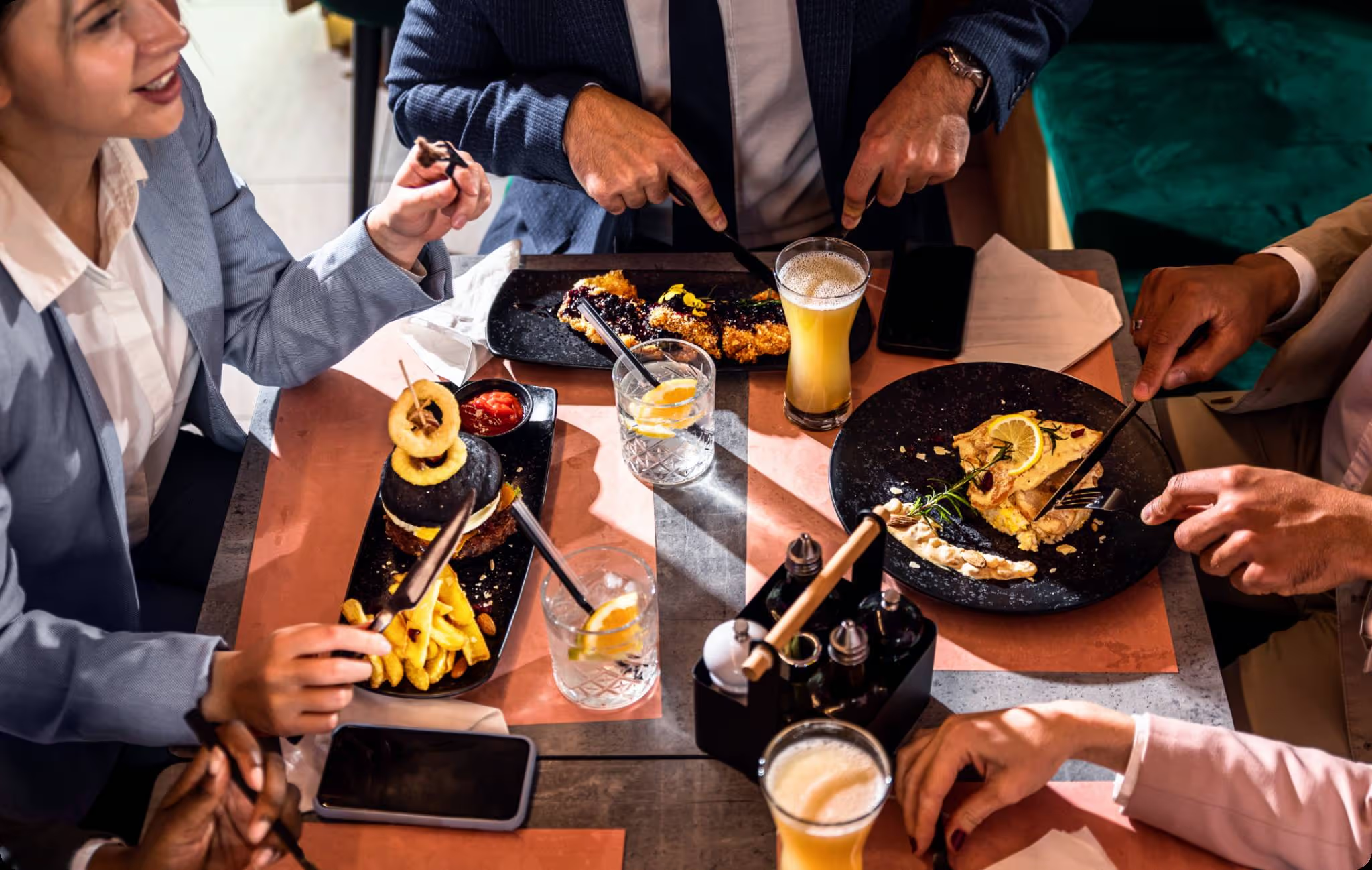
If, on the other hand, you use low quality ingredients, serve food that is bland, and either over or undercook your meals, it doesn’t matter what else you do right. Those guests are not likely to come back no matter how good your loyalty program is. So make sure you’re nailing the product and you’re on your way to a successful enterprise. 
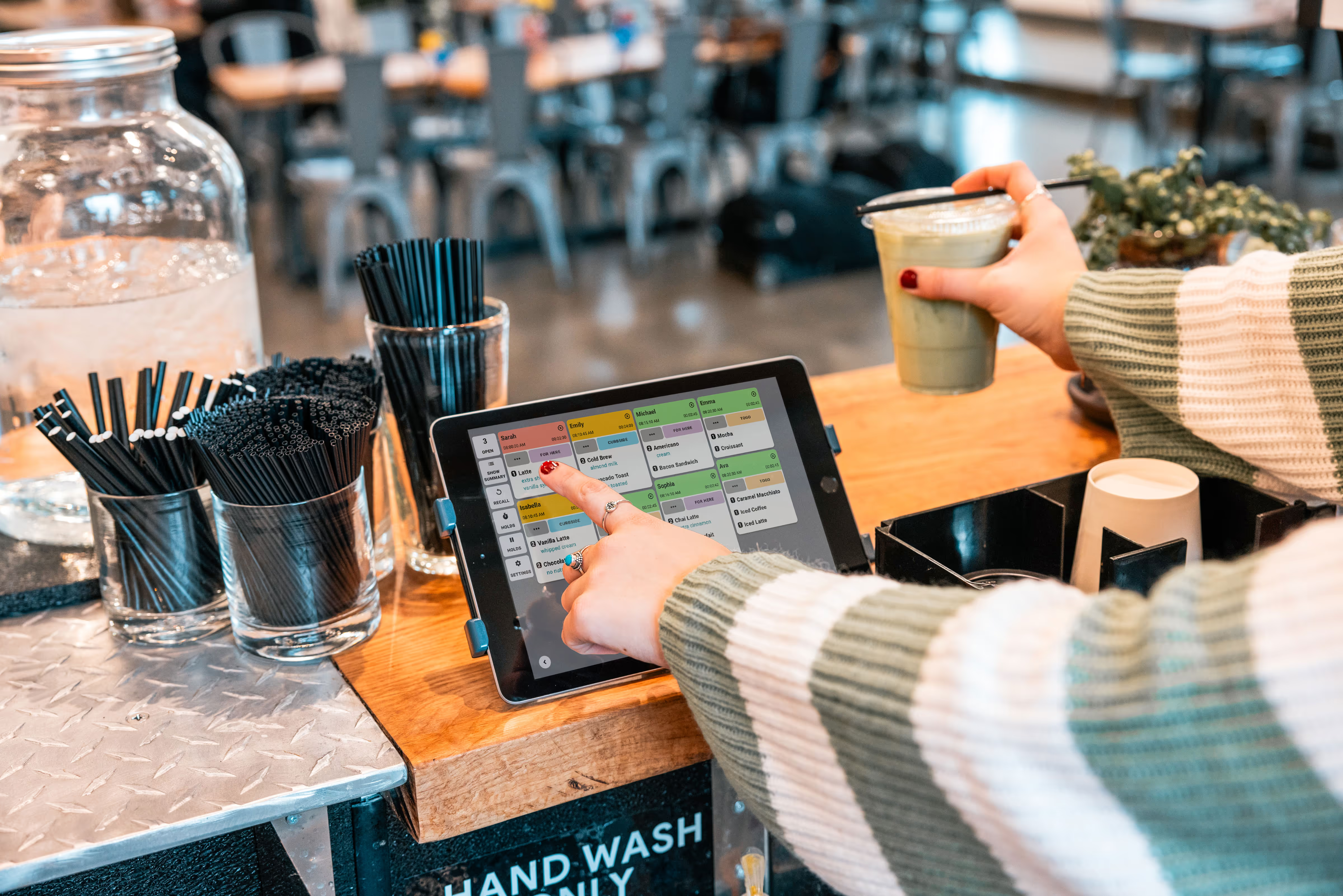
Serve every order on time

Deliver real value (not just low prices)

The second thing you need to get right is delivering a good value. Value is different from price, and, perhaps unfortunately, it’s largely in the eye of the beholder. Of course you need to price your food to cover your costs, but you also need to price it so that guests perceive your offering as a good value. Consumers are often willing to pay more if they believe they are getting more. In the case of restaurants “more” could mean quality, it could mean portion size, or it could mean other intangible benefits (perhaps even those loyalty stars the guest is earning on their way to their next free cookie). 

To deliver good value to your customers you need to understand what your customers want when they come to eat at your restaurant. If they want a lot of food at a low price, then you can focus less on ingredient quality and more on portion sizes and throughput so you can make up for lower margins with higher volume. If your customers want to enjoy a meal with their family, then you might deliver value by adding affordable kids meals and offering coloring sheets. If guests frequent your restaurant for special occasions, you add value by serving the highest quality ingredients and by pacing the meal correctly. 

Procide a consistent , on-time experience

The most important thing to remember about delivering value is that value is primarily about meeting the expectations of your guests. Which brings us to the third thing you need to do to make your restaurant a success–provide a consistent experience that meets your guests’ expectations every time. The two most important parts of a consistent experience are preparing orders correctly and having them ready on time. 
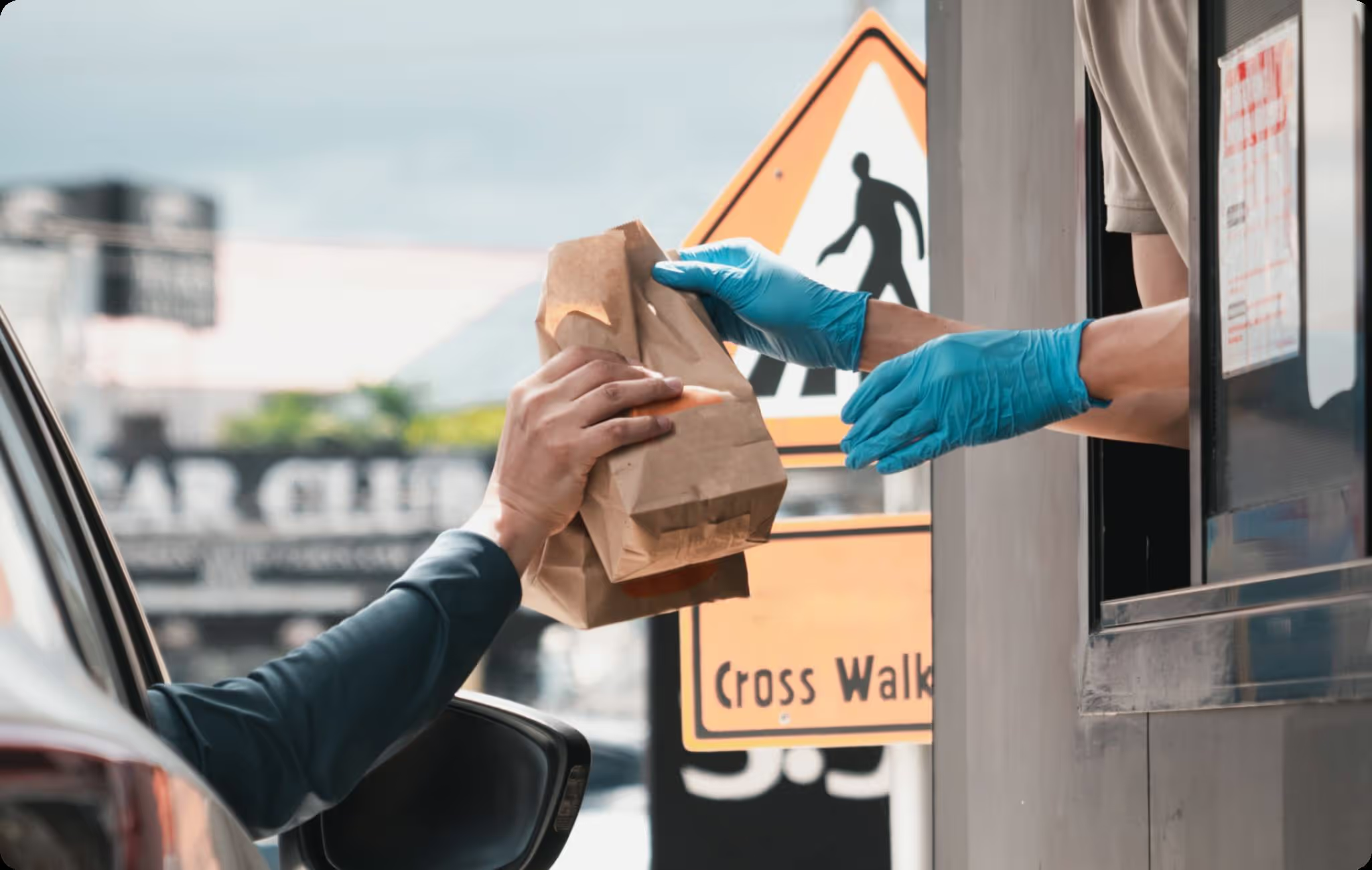
What “on time” means in a restaurant depends on a number of factors. Customers sitting down to eat at a full service restaurant might expect their food to take 15 minutes, but if they order an appetizer, that needs to come out much faster. If you’re eating lunch at a fast casual chain, waiting 15 minutes for your food is way too long since you need to make it back for your next week. And if you’re waiting on your latte for 15 minutes? That’s broken trust. 
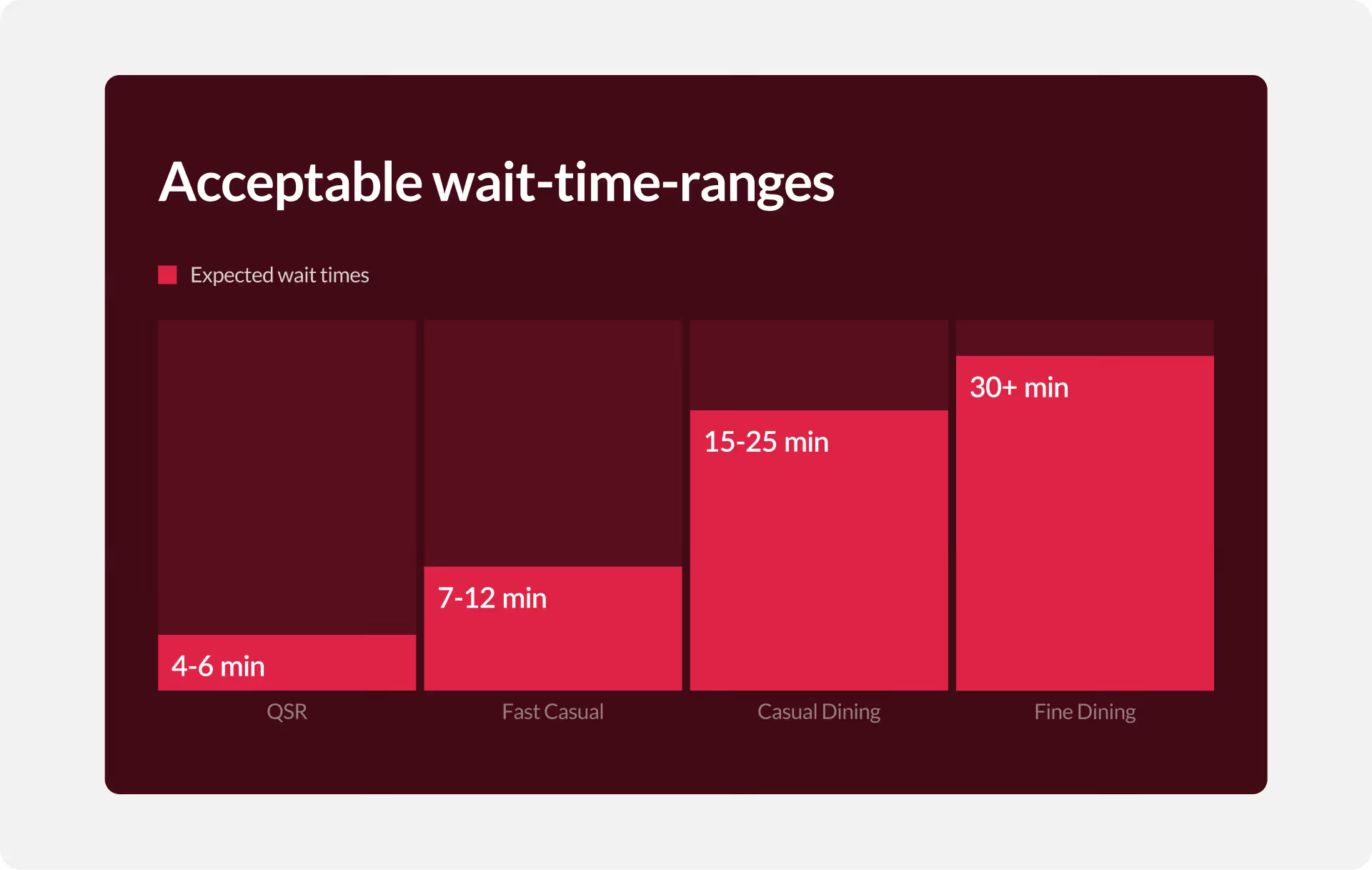
For in store orders your service type is what sets expectations. These are implicit promises, but still important to the guest. For off premise orders, however, you’re making the guest an explicit promise by providing a quoted pickup time or allowing the guest to choose their pickup time. For these orders, on time means having the order ready at the promised time–not ready late but also not ready too early, since having food ready too early can reduce the quality and violate our first principle (making food that tastes good and that people want to eat). 

So there you have it. Each of these things is difficult to execute, but if you focus the majority of your efforts on making good food, offering good value, and delivering it consistently on time your chances of having a successful business skyrocket.

Ready to try Fresh KDS in your restaurant?

February 27, 2026

The only 3 things you need to get right to run a successful restaurant

Running a restaurant isn’t easy. The industry is notorious for lower margins and high failure rates. Despite the difficulty involved in running a restaurant, however,  it isn’t actually that complex. When you zoom out and look at how restaurants make money and how consumers make choices, there are really only three things you have to get right to have a successful restaurant. 

Serve food that customers crave

The first is making food that tastes good and that people want to eat. There’s no sugar-coating it–if your food isn’t good, your restaurant won’t last very long. (And if your food isn’t great you actually might want to try sugar-coating it.) When it comes to choosing where to eat, consumers are being led by their taste buds. If you serve up delicious, tantalizing, mouth watering dishes a lot of other sins will be forgiven. 

If, on the other hand, you use low quality ingredients, serve food that is bland, and either over or undercook your meals, it doesn’t matter what else you do right. Those guests are not likely to come back no matter how good your loyalty program is. So make sure you’re nailing the product and you’re on your way to a successful enterprise. 

Serve every order on time

Deliver real value (not just low prices)

The second thing you need to get right is delivering a good value. Value is different from price, and, perhaps unfortunately, it’s largely in the eye of the beholder. Of course you need to price your food to cover your costs, but you also need to price it so that guests perceive your offering as a good value. Consumers are often willing to pay more if they believe they are getting more. In the case of restaurants “more” could mean quality, it could mean portion size, or it could mean other intangible benefits (perhaps even those loyalty stars the guest is earning on their way to their next free cookie). 

To deliver good value to your customers you need to understand what your customers want when they come to eat at your restaurant. If they want a lot of food at a low price, then you can focus less on ingredient quality and more on portion sizes and throughput so you can make up for lower margins with higher volume. If your customers want to enjoy a meal with their family, then you might deliver value by adding affordable kids meals and offering coloring sheets. If guests frequent your restaurant for special occasions, you add value by serving the highest quality ingredients and by pacing the meal correctly. 

Procide a consistent , on-time experience

The most important thing to remember about delivering value is that value is primarily about meeting the expectations of your guests. Which brings us to the third thing you need to do to make your restaurant a success–provide a consistent experience that meets your guests’ expectations every time. The two most important parts of a consistent experience are preparing orders correctly and having them ready on time. 

What “on time” means in a restaurant depends on a number of factors. Customers sitting down to eat at a full service restaurant might expect their food to take 15 minutes, but if they order an appetizer, that needs to come out much faster. If you’re eating lunch at a fast casual chain, waiting 15 minutes for your food is way too long since you need to make it back for your next week. And if you’re waiting on your latte for 15 minutes? That’s broken trust. 

For in store orders your service type is what sets expectations. These are implicit promises, but still important to the guest. For off premise orders, however, you’re making the guest an explicit promise by providing a quoted pickup time or allowing the guest to choose their pickup time. For these orders, on time means having the order ready at the promised time–not ready late but also not ready too early, since having food ready too early can reduce the quality and violate our first principle (making food that tastes good and that people want to eat). 

So there you have it. Each of these things is difficult to execute, but if you focus the majority of your efforts on making good food, offering good value, and delivering it consistently on time your chances of having a successful business skyrocket.

Ready to try Fresh KDS in your restaurant?

Switch to Fresh KDS with confidence

Follow this step-by-step guide for a quick and stress-free switch from Square KDS to Fresh KDS.

Why Speed of Service Matters

See why speed and consistency are key to restaurant success, improving guest satisfaction, revenue, and efficiency.

Get started for free.

Begin your Fresh KDS 7-day trial today by setting up your account. The process is completely free, and only takes a few minutes. No credit card is needed, and you can cancel anytime.

Get started - it's free
Boosting kitchen EFFICIENCY at