Automations
Automations
Set the rule once, let the screen handle the rest
On-screen alerts that automatically flag important kitchen moments, like long cook times and large orders, so your team can catch them sooner.
.webp)
On-screen alerts that automatically flag important kitchen moments, like long cook times and large orders, so your team can catch them sooner.
Explore Fresh KDS with our interactive demo. See how simple order management can be.
Kitchens run on attention, and attention is the one thing a busy shift never has enough of. A manager mid-rush is watching the pass, the line, the pickup counter, and every ticket that might be quietly falling behind, all at the same time. The tickets that slip are rarely the obvious ones. They're the ones nobody was looking at when the moment mattered.
Most kitchen problems aren't hard to solve once someone notices them. The hard part is noticing in time. An item with a long cook time that doesn’t get dropped. A 12 top ordering in the middle of the rush. These are the kinds of things a person could catch, except during a busy shift their attention is usually elsewhere.
These are some of the gaps the new Fresh KDS Automation templates are built to close: on-screen alerts that watch for a specific condition and surface it the moment it happens, so a line cook doesn't have to notice it on their own.
Automations are a set of customizable rules that run based on triggers (for example, an order hitting the KDS screen), conditions (for example, containing a large number of items), and an action (for example, displaying an on-screen alert). Two of the built-in templates raise kitchen awareness of common causes of bottlenecks.
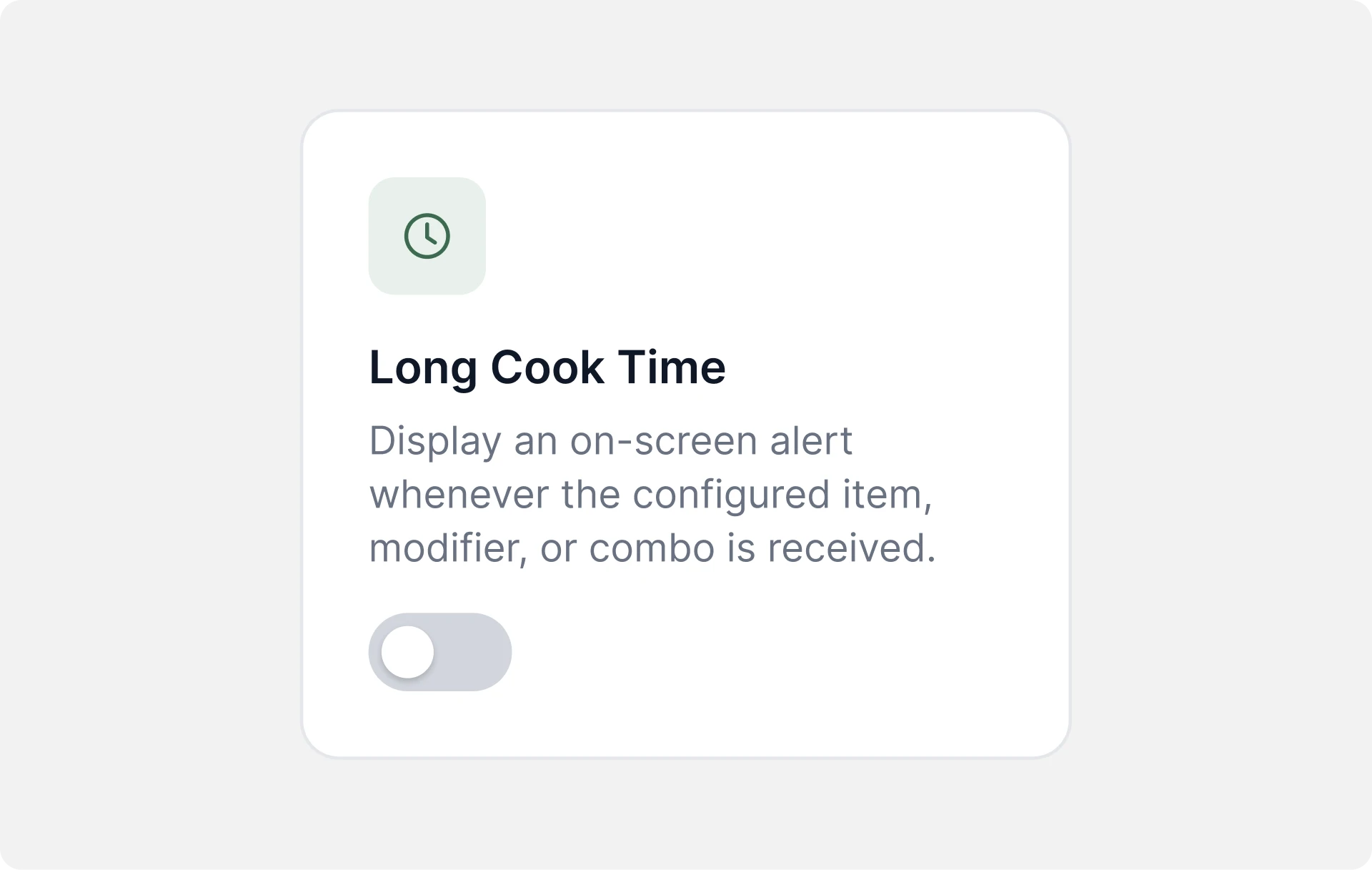
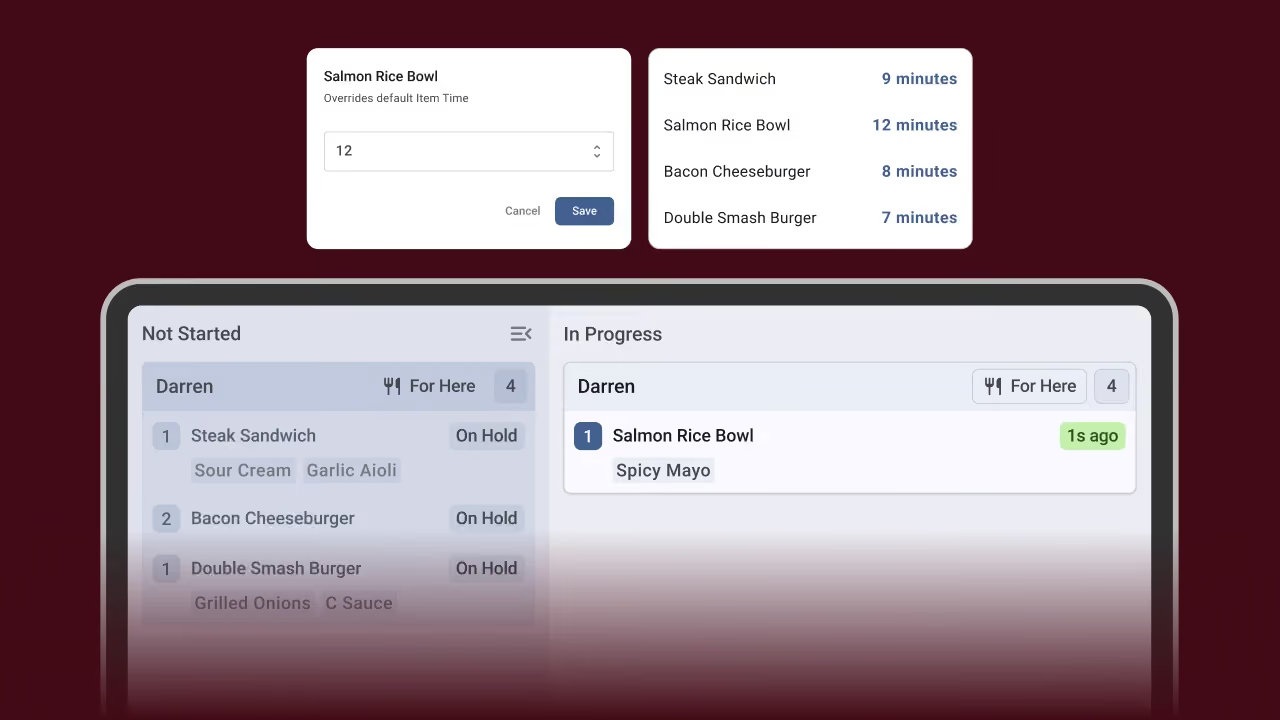
Long Cook Times flags a ticket the moment an item with a long prep time arrives, so it gets caught early instead of surfacing only once it's already running behind. You choose which items are “long” so the alerts are tailored for your restaurant and your KDS screens.
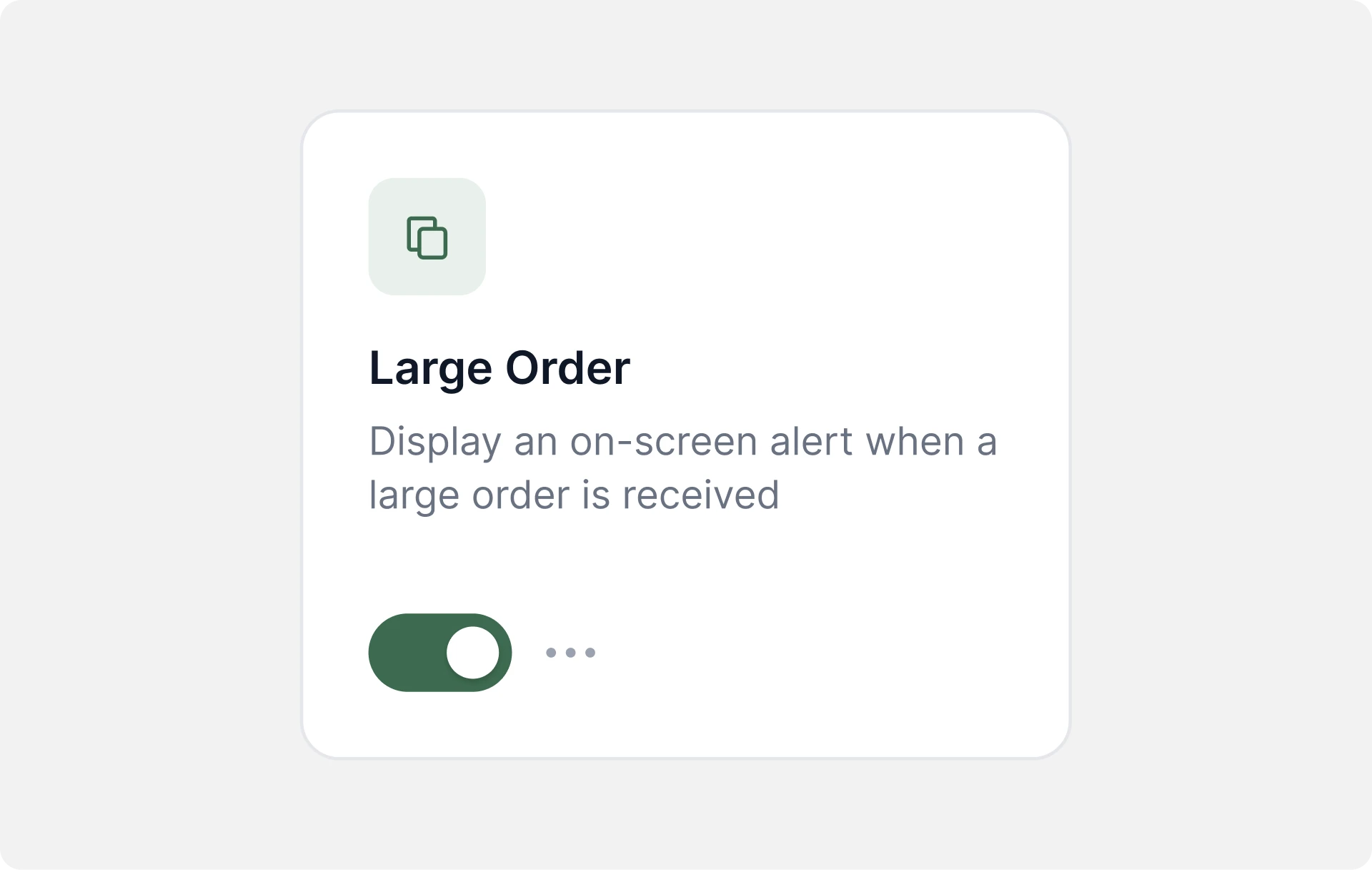
Large Order flags tickets with an item count over the configured threshold, so a station isn't caught off guard by an order that's bigger than what it's used to handling. You choose the threshold based on the volume your restaurant can typically handle.
Set either rule once, for a screen or a screen profile, and it runs the same way every shift after that. Nobody has to remember to reset it or watch for it manually.
It would be easy to build automation as one big, do-everything layer and call it intelligence. That's not the direction we're building in. A kitchen doesn't need software that reinvents how it runs. It needs the ticket that's quietly running long to get flagged before it disappears behind six other orders.
That's a deliberate choice. Automations starts narrow: one rule, tied to one real pressure point, doing one thing reliably. A restaurant that solves the smallest, most specific problem first gets more value, faster, than one waiting on a platform overhaul.
The payoff isn't a flashier screen. It's a shift where fewer things depend on a manager remembering to check them. Every alert Automations catches is a ticket that gets attention before it becomes a customer waiting too long, or a kitchen scrambling to recover from an order nobody saw coming.
Automations is still early. It's in beta, and it's the first version of what this part of Fresh KDS will become. But the direction is set: rules an operator sets once, and a screen that keeps watching for them, every shift, every location.
Fresh KDS will be at FS/TEC 2026, and Automations is part of what we'll be showing on the floor. If you want to see how it fits into your kitchen's setup, here's where to start.
Discover all the ways you can streamline your kitchen operations with Fresh KDS.
Begin your Fresh KDS 7-day trial today by setting up your account. The process is completely free, and only takes a few minutes. No credit card is needed, and you can cancel anytime.
Get started - it's free.png)


.webp)






.avif)



.avif)
.avif)


